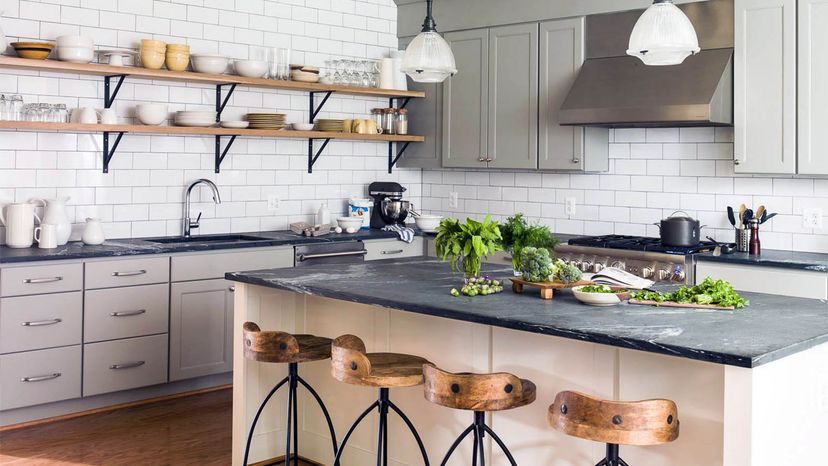
Granite ruled the kitchen renovation scene ten years ago. Then quartz arrived and stole the show with its durability and consistent look. Now, even marble has a place at the table, mostly in pristine, child-free luxury homes. But what about soapstone? It’s an old-school choice that’s making a quiet comeback. How does it stack up against the modern heavyweights in looks, toughness, and cost?
There are plenty of other materials out there. Butcher block. Stainless steel. High-end laminates that mimic stone. Each has pros and cons. But natural stone like soapstone offers something different. It’s dense. It’s unique. And it behaves differently than you might expect.
What Is Soapstone Actually Made Of?
Soapstone, also known as steatite, is a metamorphic rock. Its main ingredient is talc-schist. That means it contains about 50 percent talc.
If you know minerals, you know talc is the softest one on Earth. Diamonds sit at 10. Talc sits at 1. This makes soapstone softer than most countertop materials. Hence the name. It feels like a bar of soap.
But not all soapstone is created equal. The talc percentage varies between slabs. Some are softer. The ones used for countertops fall into the harder range. Why? Because other minerals are mixed in. Micas. Chlorite. Amphiboles. Quartz. Magnesite. Carbonates. These additives increase density and hardness.
On the Mohs Hardness Scale, soapstone for countertops scores between 2.5 and 3.5. That’s still soft. But it’s workable.
Density and Maintenance
Soapstone is incredibly dense. Compact particles. No pores. This creates an impenetrable surface. You don’t need to seal it. Marble needs regular sealing to prevent stains. Soapstone just sits there, unaffected by water and mild acids.
This low-maintenance trait is why chemists love it. Labs use soapstone for countertops and sinks. It resists corrosion. It handles heat. It doesn’t stain easily.
So, if you’re considering soapstone countertops for your kitchen, know this: it’s not for everyone. It scratches. It dents. But it also ages gracefully. And it looks incredible.
Aesthetic Appeal
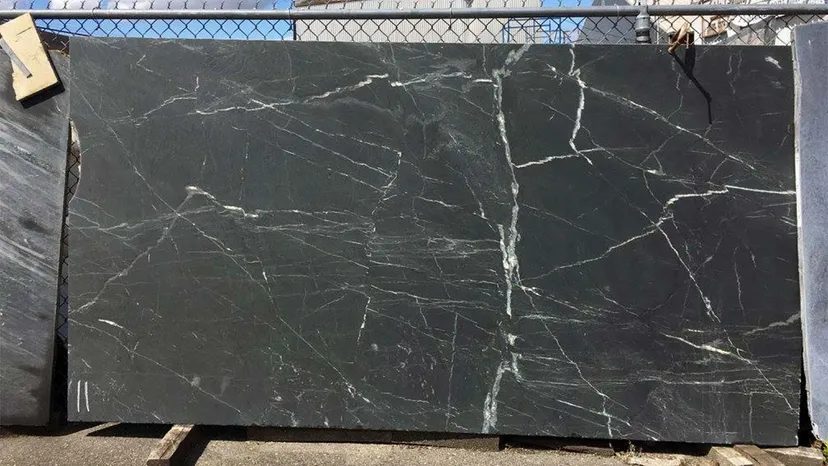
Soapstone has a matte finish. Dark gray to black. Sometimes with subtle veining. It feels warm to the touch. Not cold like granite or quartz. This warmth makes it popular in cozy, rustic, or industrial-style kitchens.
The look changes over time. Exposed to air and sunlight, it darkens. Some homeowners love this patina. Others prefer the original color. You can control the darkening process with mineral oil or butcher block conditioner. Apply it monthly. It enhances the color. It doesn’t change the structure.
Durability: The Trade-Off
Here’s the catch. Softness means susceptibility to scratches. A sharp knife will leave a mark. Dropping a heavy pan might dent it. But these aren’t flaws. They’re characteristics. Many owners see scratches as part of the stone’s story. They blend into the overall look.
Heat resistance is where soapstone shines. Place a hot pot directly on it. No damage. No thermal shock

Does Soapstone Fit Your Kitchen Lifestyle?
Soapstone has a reputation for surviving the brutal environment of science labs. It handles acids and heat like a champ. But does that translate to a chaotic family kitchen? Can it survive spilled cereal or the post-game snack rush?
The answer depends entirely on who is doing the cooking.
“It is good for countertops, depending on the buyer,” says Mandy Carbia, senior interior designer at Crosby Design Group in Atlanta. “It depends on their style or their taste.”
This isn’t just about aesthetics. It’s about how you live. If you wipe counters immediately, you might prefer marble. If you leave red wine or sauce sitting overnight, soapstone is the safer bet. It is nonporous. It won’t stain like granite or quartz.
But it has a flaw.
“It is a softer material, so it does scratch easier,” Carbia notes.
If you have young children who drop pots or if you’re the type to chop tomatoes directly on the stone, you’re going to get marks. Soapstone is soft enough to be scored by a knife.
Here is the kicker. Those scratches aren’t permanent damage. You can sand them out. The finish might not be factory-perfect afterward, but the surface stays intact. For many, that’s a feature, not a bug.
Understanding the Color Palette
Current trends favor white. Bright. Clean. Maybe with some subtle gray veining.
Soapstone does not do white.
If you walk into a stone yard looking for a white countertop, soapstone will disappoint you. The palette is restricted to Mother Nature’s darker side. We’re talking deep grays. Blacks. Occasionally, hints of blue or green if you’re lucky.
” It’s kind of ‘the darker the better’ with soapstone,” Carbia says.
Compare this to quartz. Brands like Caesarstone offer endless color and pattern options. You can mimic marble, concrete, or solid white. Soapstone from suppliers like Crocodile Rocks in Kenmore, Washington (just north of Seattle) has a limited range. It’s a niche product.
It doesn’t offer the modern farmhouse look that dominates social media feeds. It offers an Old World feel. Rustic. Heavy. Timeless.
If your natural slab comes out lighter gray than you want, you can treat it with mineral oil. This darkens the stone and enhances the color. It’s a simple maintenance step, but it’s required to get the deep, rich look soapstone is known for.
Who Should Install Soapstone Countertops?
This material isn’t for everyone. It requires a specific mindset.
Choose soapstone if:
* You entertain often and worry about stains.
* You don’t mind a rustic, darker aesthetic.
* You view minor scratches as part of the patina.
* You are willing to apply mineral oil periodically to maintain the color.
Avoid soapstone if:
* You want a bright, white kitchen.
* You hate the idea of a “lived-in” look on your counters.
* You need maximum scratch resistance for heavy-duty chopping.
Fabricators still stock it regularly, Carbia confirms. There is a niche. But it’s a small one. It’s for homeowners who prioritize function and character over trendiness.
The trade-off is real. You gain stain resistance and heat tolerance. You lose the pristine, scratch-free surface of quartz or granite.
Can you live with that?
Why Soapstone Fits (And When It Doesn’t)
Choosing a countertop isn’t just about aesthetics. It’s a calculation of taste, daily wear, and budget. Soapstone sits in a specific corner of the market. Like granite, quartz, and concrete, it has distinct advantages and glaring weaknesses.
The Case for Soapstone
The material brings a heavy, Old World weight to a kitchen. It looks dramatic. It looks permanent.
There are practical reasons to choose it, too.
It is impermeable. This makes it highly resistant to staining. You spill wine? It won’t soak in. You leave a wet dish out? No ring.
Heat is another win. The stone stands up to high temperatures. You can set a hot pan directly on the surface without damaging it. That is a luxury you don’t get with laminate or quartz.
Then there is the maintenance. Or rather, the lack thereof. Many natural stones require regular sealing. Soapstone does not. This means no chemicals are needed to keep it stable. The natural stone remains just that—natural.
It is also recyclable. If you replace it in ten years, the material can be repurposed.
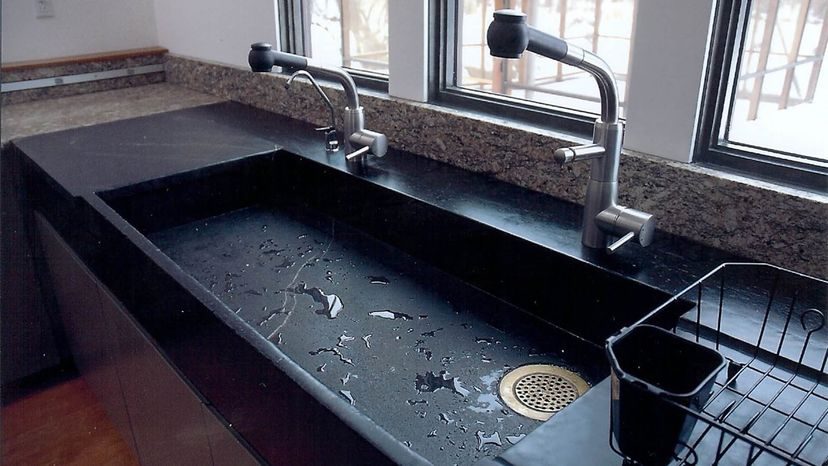
The softness of the stone allows for carving. Carbia notes that this malleability lets you integrate sinks and drain boards directly into the counter. The result is a seamless look that feels custom-made rather than assembled from parts.
The Downsides
That same softness is a liability. Soapstone scratches easily. It dents. It marks.
If you like your counters pristine, this might not be the right fit. You have to accept that life will leave a trace on the surface.
Color is also limited. Natural soapstone comes in dark shades. Grays. Blacks. Greens. It does not come in the bright, trendy whites or bold patterns seen in modern design. If you are chasing a specific, bright aesthetic, soapstone will likely disappoint.
Soapstone Costs: What You Can Expect
Price is always the final hurdle. Soapstone sits in the mid-range. It is not the cheapest option, but it is not the most expensive either.
Carbia estimates the cost at $72 to $150 per square foot, including installation. This price point is roughly equivalent to high-end granite or quartz.
However, granite offers a wider variety. Because there are so many types of granite, you can likely find a much cheaper option than soapstone. Inexpensive granite can cost as little as $20 to $30 per square foot.
For comparison, marble typically runs $75 to $250 per square foot. Quartz varies from $55 to $155 per square foot, according to HGTV.
If you want the look of natural stone without the high price tag of marble, soapstone is a viable middle ground. But you pay for the durability and the lack of sealing. You also pay for the exclusivity of the material.
The softness of soapstone, technically known as steatite, has made it a favorite for sculptors for centuries. From ancient Egypt to modern-day Zimbabwe, artists have used its ease of carving to create lasting works. That same history is embedded in your kitchen counter. It is heavy. It is old. It is hard to ignore.
This article was updated in conjunction with AI technology, then