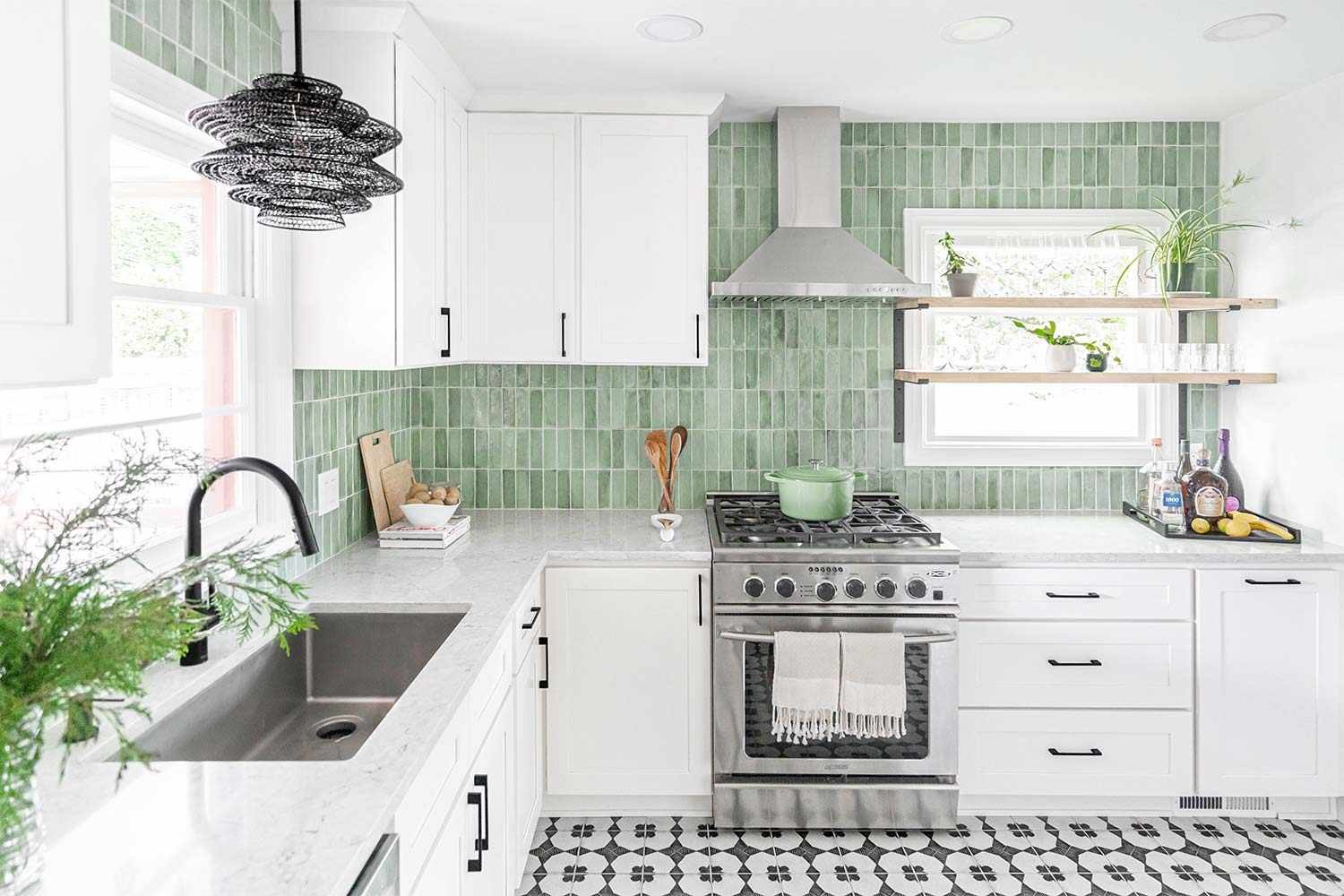
Styles change. Fast. One week it is matte black. The next, sage green.
But there is a core of design that doesn’t care about the hype. It just works.
Heylen Thienes from Tricorn Black gets it. She thinks the trick is sticking to your own tastes, not the trends. “Thoughtful design choices create a space that feels intentional.”
Simple. But also smart.
Here is what stays.
The Classic Subway Tile
You will see it everywhere. For good reason.
It is the baseline.
Principal designer Kevin Twitty says you don’t have to stay stuck in 1920s mode. Use the standard 3 by 6 inch rect, or go taller. Modernize the shape. The concept remains, the execution changes.
Does it ever get old? Maybe if you are bored easily.
Brick Work
Brick shapes are versatile. They do not overwhelm a room.
Most people reach for white, cream, ivory. Safe. Sterile? Sometimes.
Thienes points out a shift toward texture. Things with a “human touch.” Like Fireclay bricks that show a little grit. Movement matters. A perfect surface feels dead. A slightly uneven one feels alive.
Natural Stone
Stone warms a room. Instantly.
Use it raw. Or make a pattern, as Catalina Castaño suggests.
“The natural texture and variation in the stone introduce rich visual interest,” she says. “It feels unique and classic.”
She used that word seamless once, I guess. But really, she means it blends well. Stone adds depth without trying too hard. It is expensive, yes. But it lasts.
Patterned Neutrals
Who said neutrals have to be boring?
Take a standard vertical lay. Spin it. Add stars, crosses, or herringbones.
Thienes loves this move. When patterns pop with bright colors, they date themselves within five years. Put that same complex pattern in neutral tile?
Timeless.
It gives dimension without shouting. It is a quiet twist.
The Grout Choice
Look at the gaps between the tiles. Really look.
You do not need grey on white. Always.
“People are getting playful with grout,” Thienes notes. Try bold colors. Contrast.
It acts like an accent stripe. An unexpected line against neutral walls. It stays relevant because it is the detail, not the headline.
Marble
The heavy hitter.
Every slab is different. You cannot replicate marble easily. Which means it never repeats. Never feels stale.
Twitty calls it the hall of fame entry. “Timeless style and sophistication.”
It brings luxury. It brings veining. It stays neutral enough for any cabinet style.
Will it etch? Sure. But that is part of the history.
Ceramic Versatility
Ceramic covers so much ground. Penny tiles. Rectangles. Smooth, glossy, rough.
It does not fade. Literally or figuratively.
Castaño groups it with brick and metallic options. “Chic and effortlessly sophisticated,” she claims.
I like that word approachable. Luxury should feel welcome, not intimidating. Ceramic is welcome.
A Touch of Shine
Matte is quiet. Glossy is loud. Metallic sits somewhere interesting in between.
Consider pearlescent finishes. Copper tones.
“A metallic backsplash adds a subtle pop of sparkle,” Castaño says. “Stunning on any wall.”
It catches the light differently at 7 am than at 7 pm. That movement keeps it from feeling flat.
One Continuous Surface
Stop matching the wall to the floor. Match it to the counter.
Take that slab. Run it straight up the wall. No grout lines.
Twitty loves this for maintenance. “Easier to clean behind sinks,” he says.
But also, it looks clean. Unified. A solid plane of material removes visual clutter. The eye travels straight to your coffee machine.
Sometimes, doing less is the boldest move you make in the kitchen.
You pick one path. Maybe stone. Maybe subway. Or you mix them and hope for the best.
There is no single answer. Just good choices that do not annoy you in five years.
Which one fits your wall?