


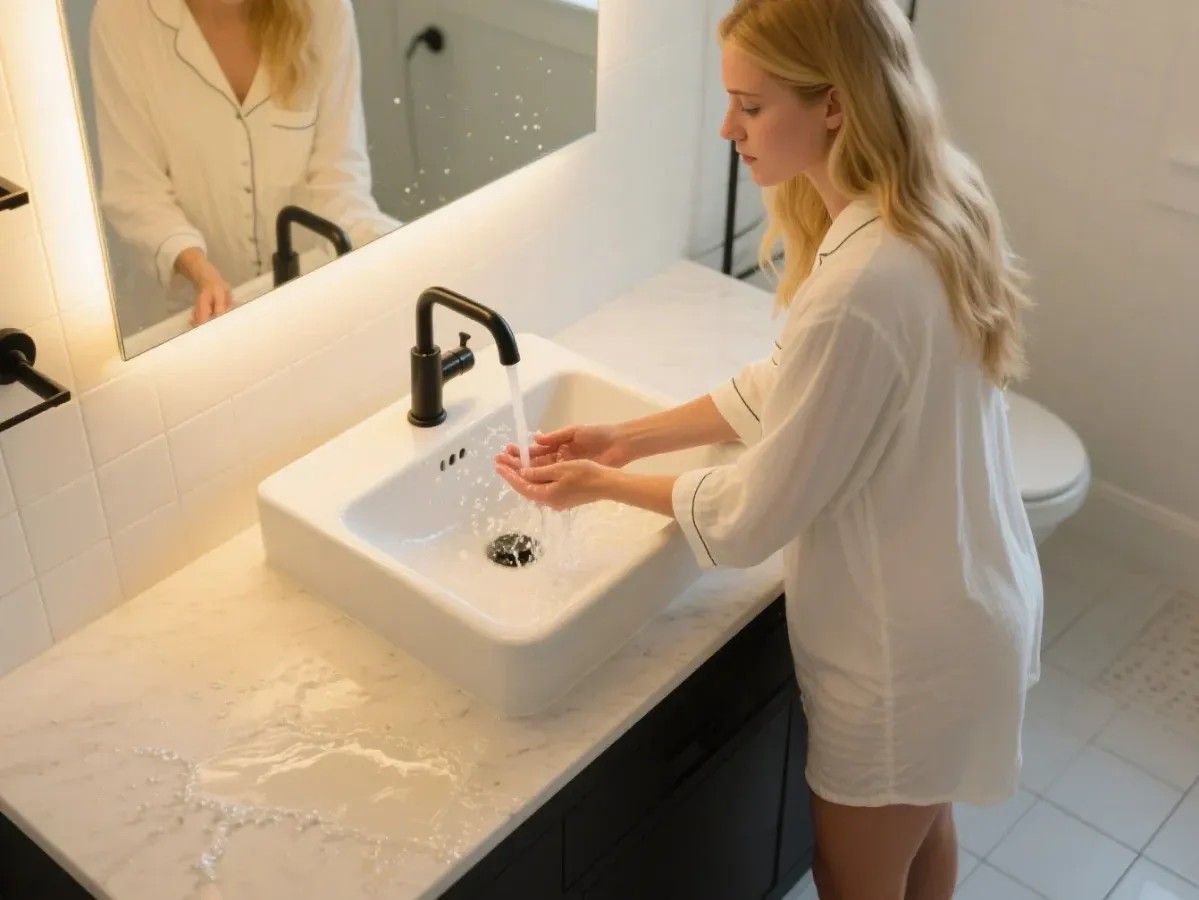
Washbasins are a common source of frustration in many homes: water on the floor, mirrors, and countertops despite seemingly simple design. The real issue isn’t usually the faucet or basin itself, but rather how and where they’re positioned. Small errors in placement can dramatically increase splashing, making bathrooms messy and hard to maintain.
This article breaks down the common causes of washbasin splashing and offers practical solutions to create a cleaner, more functional bathroom.
The Geometry of Splashing
From a design perspective, splashing isn’t random. It’s a direct result of physics: the height, angle, and force of water interacting with the basin’s shape and the user’s movements. Ignoring these factors during installation guarantees a messy outcome.
Common Causes of Washbasin Splashing
Here are the key reasons why water ends up where it shouldn’t:
- Incorrect Height: A basin installed too high or too low forces awkward hand angles, increasing splash. Tall users bend excessively; short users reach up. Children struggle with standard heights.
- Wall Proximity: Basins flush against walls restrict movement, causing water to hit the wall instead of the basin. This leads to dampness, mildew, and hard-to-clean corners.
- Insufficient Depth: Shallow basins can’t contain standard water flow. Water rebounds instead of settling, splashing onto surfaces. Depth must match faucet pressure.
- Poor Faucet Positioning: High-mounted faucets increase splash velocity. Faucets too far back push water onto the basin’s rear, bouncing it out.
- Misaligned Faucet Angle: A misaligned spout directs water into the basin unevenly, causing side splashes and turbulence.
- Mirror Amplification: Mirrors behind basins make every splash visible, encouraging users to lean closer—and splash more.
- Countertop Integration: A basin too close to the counter edge or set too shallow increases splashing. Proper distance is essential for comfortable use.
- Excessive Water Pressure: Some basin shapes can’t handle high pressure, causing water to bounce off clothes and countertops.
- Oversized Basins in Small Spaces: Large basins in narrow bathrooms restrict movement, forcing awkward angles and increased splashing.
- Poor Drain Placement: A drain hole positioned near the edge creates sharp rebounds and directs water outward instead of down.
- Hidden Issues Reveal Themselves Later: Splashing often isn’t apparent during installation because realistic water pressure and user patterns aren’t tested.
Engineering and Design Solutions
The fix isn’t always expensive replacement; it’s often about correcting positioning errors. Consider these strategies:
- Optimal Height: Aim for 32-34 inches from the floor, adjusted to user comfort.
- Faucet Alignment: Ensure the spout falls near the basin’s center.
- Proper Depth: Match basin depth to water pressure. Shallow basins require gentle flow; deeper basins handle more.
- Wall Clearance: Leave enough space behind the basin to prevent backsplash.
- Mirror Ergonomics: Position the mirror comfortably, avoiding excessive leaning.
- Pressure Management: Use aerators or flow restrictors if pressure is high.
- Shape Compatibility: Ensure basin curvature matches faucet angle and flow pattern.
Frequently Asked Questions
- Why does my basin splash even with low pressure? The faucet stream might hit the wrong part of the basin, or the basin may be too shallow or close to the wall.
- Does faucet height matter? Yes. Higher faucets increase fall distance, leading to more splashing.
Ultimately, avoiding washbasin splashing isn’t about luck; it’s about understanding the simple geometry of water flow and making informed design choices. A well-positioned basin is not just cleaner, it’s a more functional and pleasant addition to your bathroom.


