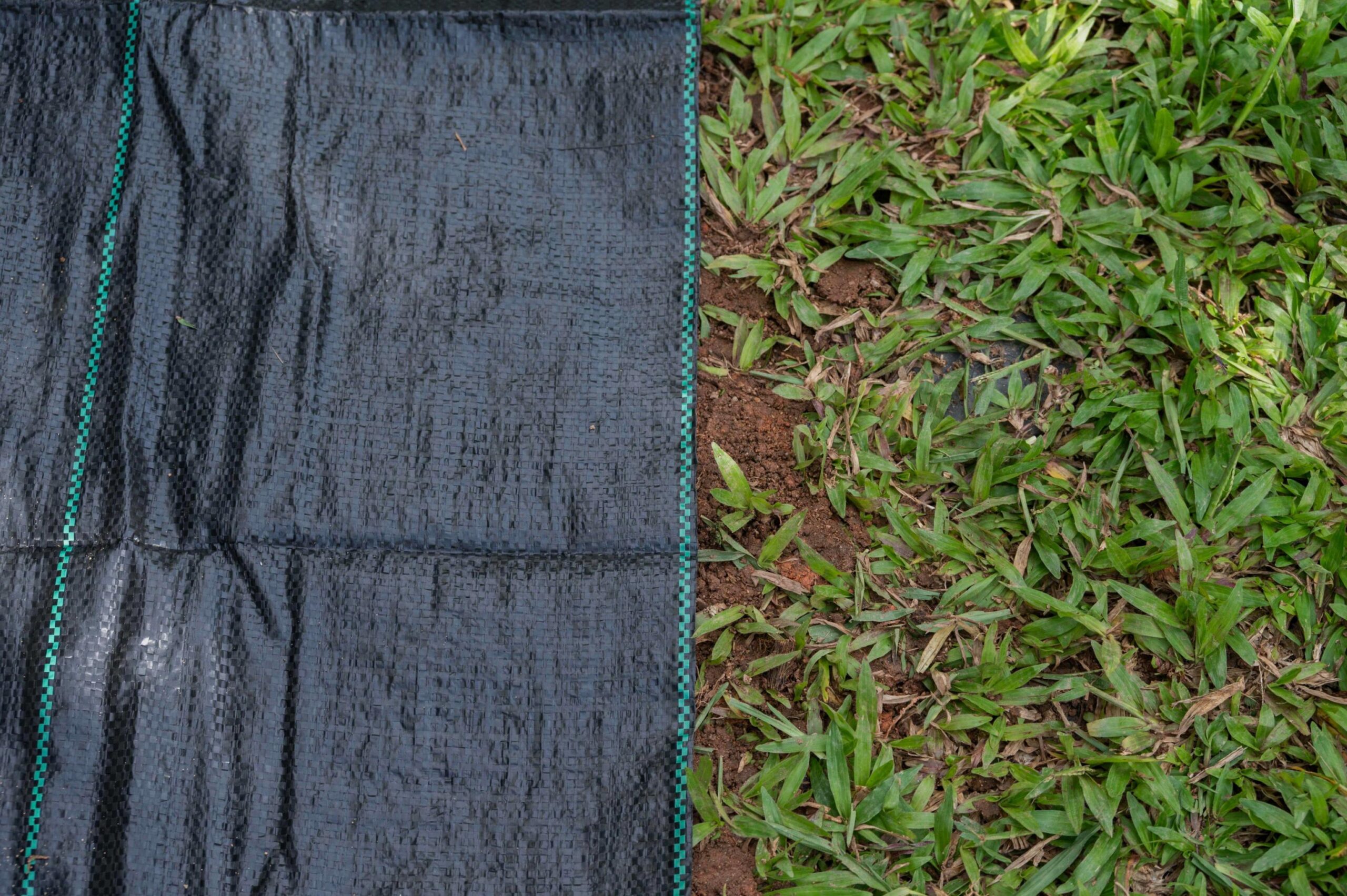
Decades of garden culture told us landscape fabric was magic.
Lay it down. Pour mulch. Be done.
But pros are walking away from it. Why?
The short term is fine. Weeds stay gone for a bit. Long term? That is when the trouble starts.
Is it worth the headache later? Maybe. Probably not.
Dan Sekowski knows the drill. He has seen the lifecycle of these barriers up close.
“While they may suppress weeds initially,” he says, “they often fail over time.”
Mulch rots. Leaves fall. Dirt accumulates on the plastic. Eventually the ground beneath that synthetic blanket wakes up and pushes through anyway.
You are building a wall
A barrier keeps things out. That is its job.
The problem is it keeps the good stuff out too.
Mary Phillips gets this.
“Organic mulch is meant break down and feed soil. Fabric interrupts that process,” she says. It stops decomposition. It stops fertility. Instead of building ground you end up degrading it. Slowly. Quietly.
You will see it when the plants get sad. They won’t thrive. They will struggle.
Air and water matter. Fabric lies about letting them in.
“Thick fabrics restrict flow,” Phillips notes. Thinner ones get clogged by debris.
Plants wilt in heat. They stress. They suffer because their roots are suffocating under a sheet that refuses to breathe.
Plastic never truly leaves
Most of this stuff is petroleum-based. It does not rot. It fragments.
Tiny bits remain in the soil for years. A legacy of synthetic waste where there should be dirt. Cleanup becomes a nightmare later on. Or it stays forever.
Then the roots come.
Even if weeds pierce the plastic they tangle into it. Sekowski calls it a mess to remove. “The fabric becomes tangled with roots.”
Want to pull the weed now? You might be tearing out the root ball with chunks of plastic stuck to it. Or worse you leave it because you can’t separate it cleanly.
Maintenance turns into a war against the materials you installed.
Better options exist
You still need to beat back weeds. They move fast. An unmanaged bed looks ugly quickly. It hurts more to pull later than now.
But you do not need the plastic sheet to help you do it.
Giving up the weave does not mean surrendering control. Just swap the strategy. Use methods that work with the soil instead of against it.
Here are ways to keep it clear without trapping it:
- Heavy organic mulch that actually decomposes.
- Cardboard layers to block light and feed the earth.
- Simple hand-weeding early before roots set deep.