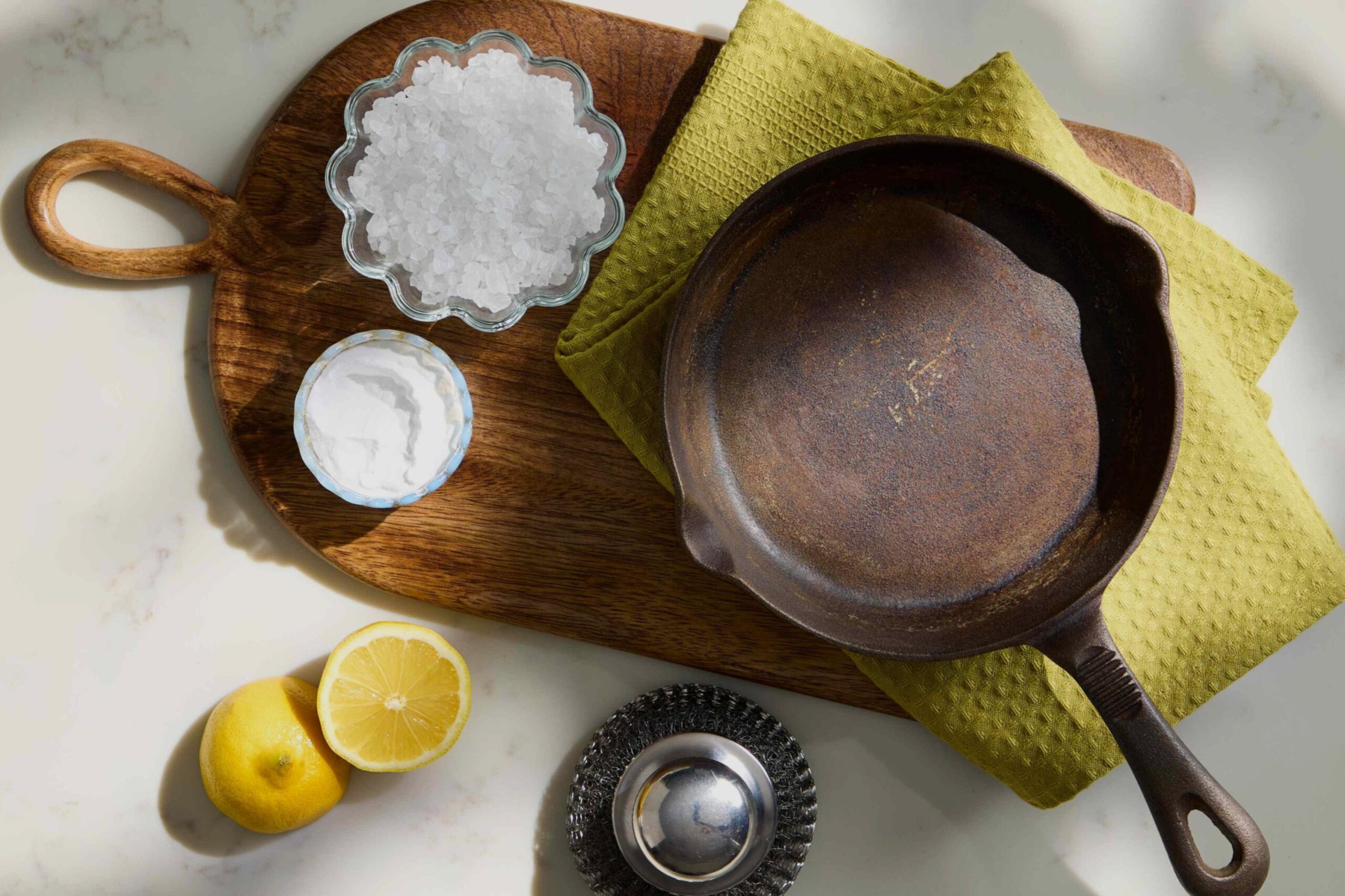
Cast iron skillets are kitchen workhorses, prized for their heat retention and durability. However, they’re susceptible to rust if not properly maintained. This guide details how to remove existing rust and prevent its return, ensuring your cast iron stays in top condition.
Understanding Rust on Cast Iron
Rust forms when iron reacts with oxygen and moisture. On cast iron, this can happen quickly if the seasoning (the polymerized oil layer) is compromised. A well-seasoned pan is the best defense against rust. Neglecting cleaning or storing the cookware improperly leads to corrosion, but fortunately, it’s often reversible.
Removing Rust: Four Effective Methods
Several methods can restore a rusty cast iron skillet. Each requires some effort, but the results are worth it.
1. Steel Wool Scrubbing
This is the quickest fix for minor rust. Use steel wool (or aluminum foil as an alternative) to physically scrub away the corrosion. Follow with warm, soapy water, thorough drying with a lint-free cloth, and immediate re-seasoning (detailed below).
2. Vinegar Soak
For moderate rust, a vinegar soak can dissolve the corrosion effectively. Combine equal parts white vinegar and warm water in a bucket or sink. Submerge the cast iron for 30-60 minutes, checking periodically. Once the rust flakes off, scrub with steel wool, rinse, and dry completely before re-seasoning.
3. Baking Soda Paste
A baking soda paste provides a gentler abrasive action. Mix baking soda with water to form a paste, apply it to the rusted areas, and scrub with steel wool or a cast iron brush. Rinse thoroughly and re-season immediately after drying.
4. Coarse Salt Scrub
Coarse salt acts as a natural abrasive. Pour 2-3 tablespoons of kosher salt into the pan and scrub using a damp paper towel, potato half, or lemon half. Apply pressure to rust spots, adding more salt as needed until clean. Rinse and re-season.
Re-Seasoning: The Key to Protection
After rust removal, re-seasoning is essential.
- Cover the entire pan with a very thin layer of cooking oil (flaxseed, vegetable, or canola work well) using a paper towel.
- Bake upside down in a preheated oven at 350°F (175°C) for one hour.
- Allow to cool completely before using.
Preventing Future Rust: Best Practices
Prevention is far easier than restoration. Follow these steps to keep your cast iron rust-free:
- Clean immediately after use: Remove food residue while the pan is still warm.
- Limit water exposure: Avoid prolonged soaking.
- Dry thoroughly: Use a lint-free cloth, or even place the pan on low heat to evaporate any remaining moisture.
- Oil after each use: Apply a light coat of cooking oil to maintain the seasoning layer.
- Avoid highly acidic foods: Tomatoes and vinegar can strip seasoning if the pan isn’t well-maintained.
- Use frequently: Regular cooking builds up seasoning, offering better protection.
- Store properly: Keep cast iron in a dry environment.
Proper maintenance ensures your cast iron lasts a lifetime. Ignoring rust prevention can lead to irreparable damage, so make cleaning and seasoning a priority.