Most kitchens come with a standard unit: a fridge on one side, a freezer on the other. It’s the default. You stock milk and leftovers in the cold box and ice cream in the frozen section. But what if you don’t need that frozen half? What if the freezer compartment is just dead weight, taking up valuable real estate for groceries you rarely buy?
There is a growing market for the best reasons to buy a freezerless fridge. These units, often called bar fridges or beverage coolers, offer specific advantages that standard combos ignore. Whether you are tight on space, watching your budget, or just tired of fish-flavored ice, here is why you might want to strip the freezer out.
5: To Save Space
If you live in a studio, a dorm, or a rented room with a shared kitchen, a full-size appliance is overkill. You don’t need to freeze steaks if you’re eating out or using a communal freezer. Downsizing to a half-sized fridge without a freezer solves the square-footage problem. It takes up a fraction of the floor space.
You keep personal items—soda, yogurt, fresh produce—within arm’s reach. Anything requiring freezing? Leave it in the community freezer or buy small batches from the store. The trade-off is small. The gain in usable floor space is huge.
4: To Save Money
A fridge without a freezer is almost always cheaper than a standard two-door model. Take Whirlpool as an example. A standard fridge with an icemaker and freezer runs between $899 and $1,299, depending on the extras. A basic Whirlpool freezerless fridge starts around $617. The gap widens significantly if you look at compact units, which can be found for as little as $100 at retailers like Best Buy.
There is also a clever workaround for wine lovers. A dedicated wine refrigerator can cost up to $1,000. If you don’t need precise, multi-zone climate control and just want to keep your bottles at a consistent temperature, a cheap freezerless fridge works as an ersatz wine cooler. It’s not perfect, but it’s a fraction of the cost.
Taste Transfer
Ever opened your fridge and tasted something odd? That fishy ice cube? It’s not magic. It’s physics. Air circulates from the freezer compartment at the top, down through the fridge, and back up. This cycle can cause taste transfer. Food in the top-left corner gets colder—and sometimes freezes—because it’s closest to the cold air intake. Meanwhile, flavors migrate. Your ice absorbs odors from the fish on the middle shelf. Removing the freezer stops the primary source of that air churn, reducing the risk of cross-contamination.
3: To Save Energy
Need a second fridge for all that deli meat and endless cupcakes? A freezerless model might actually lower your electric bill. Most modern appliances carry an Energy-Star rating, meaning they meet strict efficiency standards set by the U.S. Department of Energy. You can check the yellow EnergyGuide label for estimated yearly costs.
We looked at two Kenmore models from Sears to see the difference:
- Standard Fridge: An 18.2 cubic foot top-freezer model uses an estimated 479 kWh yearly, costing about $51.
- Freezerless Fridge: A 16.7 cubic foot fridge without a freezer uses 438 kWh yearly, costing roughly $40.
It’s not a massive difference, but it adds up. You are cooling less volume. You aren’t paying to keep a block of ice at zero degrees when you don’t need it.
2: To Have Extra Fridge Space
This is the most obvious benefit, yet the least discussed. When you remove the freezer compartment, you reclaim that entire volume for fresh food. No more cramming lettuce into a drawer that’s too small. No more fighting for shelf space with frozen pizzas. You get one continuous, usable cold zone. For someone who buys fresh farmers market produce every week, this is a game-changer. The freezer becomes a museum piece; the fridge becomes a pantry.
But before you toss your ice maker, consider the workflow. Do you really want to make a separate trip to the store for ice? Or are you willing to adapt? The answer depends on how you live, not just what you buy.
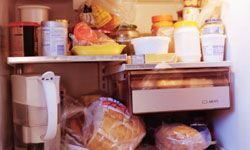

Let’s be honest. If you buy groceries in bulk to save money, but end up with a full fridge, you haven’t saved anything. You have just created a logistical nightmare.
This is where the second unit changes the game. It’s not just about the extra space. It’s about reclaiming your sanity.
Another refrigerator takes care of the overflow. Bulk drinks. Loose produce. Fresh meat that needs its own zone. Dairy products that smell like they belong on another shelf. Even if your household is small, think about the weekends. Potlucks. Unexpected guests. Shuffling plates and Tupperware in one fridge feels like a video game level designed to frustrate you.
An extra fridge takes that stress away. It keeps things tidy. And the best part? Location doesn’t matter. You can put it in the garage. The basement. That awkward corner under the stairs.
Hiding Appliances for a clean look
If you’re in the middle of a renovation, your design instincts may rebel at the thought of a bulky box sitting out. But modern solutions have changed the landscape.
Interior designers often recommend splitting the function. Instead of a giant monolith, you get a separate large freezer and freezerless refrigerator. In a custom kitchen, these units are built-in. They are disguised. The Panel-ready doors fit perfectly with the surrounding cabinets.
You can slide them into any corner without breaking the visual flow of the room. They become an invisible storage.
There is another option that is gaining traction: refrigerator drawers.
These are basically freezerless fridges and are placed in the lower cabinets. Think of them as high-capacity snack stations or soda reserves. Easy to reach. Easy to see. You no longer have to digging through crisper drawers to find juice boxes.
Practical Benefits of Dedicated Zones
Why bother adding another appliance?
-
Temperature Consistency
When you open the main refrigerator door to grab a soda, the temperature inside drops. Your milk warms up. Your eggs risk spoilage. The secondary unit stays closed more often. Less temperature fluctuation mean less food waste. -
Hygiene and cross-contamination
Raw meat juices do not belong in your leftovers. A special refrigerator for high-risk items or bulk purchases keeps the main kitchen area clean. You can store strongly smelling foods away from the main unit. Onions won’t flavor your butter. -
Entertainment Readiness
Are you hosting a dinner party? Keep drinks cold in the garage fridge. The main refrigerator is reserved for plating and serving. Your guests won’t be watching as you struggle with a overstocked door.
Backup appliance placement
Here you have flexibility. A garage is popular, but not always ideal. Most standard refrigerators are not designed for extreme heat or cold. If you live in an area with harsh winters or sweltering summers, check the manufacturer’s specs. You may need a \ with a wider operating temperature range.
For indoor installations, consider airflow. Every refrigerator needs ventilation. Leave space around the coils. Do not store it in a tight cabinet without sufficient gaps, otherwise the motor will be overloaded.
Check the outlet. If you add a new circuit, you need your own circuit