


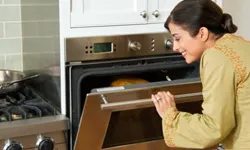
You don’t need a culinary degree to want a kitchen that works. Let’s be honest. Many of us watch cooking shows purely for the drama. Whether we actually attempt a complex roulade is secondary. The allure is simpler: the hope that with the right tools, we can handle anything from Thanksgiving turkey to a simple weeknight pasta. Nothing signals “I’m taking cooking seriously” like a sleek, high-tech range.
But buying a new oven isn’t just about aesthetics. It’s about solving the daily friction of meal prep. Here are five features that actually matter. Some are staples. Others are surprises that change how you cook.
5: Dual Ovens for Stress-Free Hosting
Remember trying to roast a turkey and bake pumpkin pie simultaneously? You compromise on temperature. The pie burns. The turkey is undercooked. It’s a classic disaster.
Dual ovens solve this. You get one large cavity for roasts or whole chickens. You get a smaller, secondary oven for sides, appetizers, or desserts. Each has independent temperature controls. This means you can bake at 350°F while broiling at 450°F. No more compromises.
There is a practical energy benefit too. Need to reheat a single serving? Use the smaller oven. You avoid heating a massive chamber. You save energy. Your kitchen stays cooler in summer.
4: Convection Cooking Explained
Convection cooking uses a fan to circulate hot air. This forces heat onto the food from all sides. The result is faster, more even cooking. You save time. You save energy.
But the real benefit is structural. Convection ovens reduce the hassle of adjusting racks. In a conventional oven, heat rises. You must move racks to avoid burning the top or undercooking the bottom. This leads to the “oven rack dance.” You open the door. Heat escapes. Temperature drops. You fumble with mitts. You risk burns.
With a convection oven, the fan equalizes the heat. Rack placement becomes less critical. The air moves, so the food cooks uniformly. You can leave a tray where it sits. No more char marks on your wrists from frantic adjustments.
What is Trivection?
Trivection takes this a step further. It combines three heating methods: convection, microwaves, and thermal heating. The goal is speed. Food cooks faster. Energy use drops. It’s still somewhat novel in electric ovens, but it signals where the industry is heading.
3: The Truth About Sabbath Mode
The name sounds religious. It isn’t. It’s a “hold” feature. It keeps food warm for extended periods without drying it out. Think of it like the heat lamps in a restaurant kitchen.
This is useful for real life. Maybe your partner is working late. Maybe guests are running behind. You don’t want to sacrifice texture for timing. Sabbath mode maintains a low, steady warmth. It preserves moisture. It prevents the “dried-out meatloaf” scenario. It’s less about ritual and more about logistics.
2: Tempered Glass Doors
Safety and visibility go hand in hand. A glass door lets you monitor cooking without opening the chamber. Every time you open an oven door, you lose heat. The cycle restarts. Cooking time extends.
Tempered glass handles this thermal shock. It stays cool to the touch (usually) and provides a clear view. You can check on browning without disturbing the airflow. This is especially important if you’re using convection. You want to see the air circulating, not just the static heat. It reduces guesswork. It gives you confidence that the crust is forming, or the soup is simmering, without breaking the seal.
The next time you stand in front of a showroom range, look past the finishes. Look at how the air moves. Look at how the heat holds. The best oven isn’t the one that looks most expensive. It’s the one that stops you from fighting it.
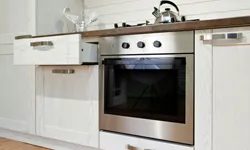

That glass window in your oven door is doing more than just letting you judge your mac-and-cheese. It is a direct energy saver.
Open that door to check on dinner and you let hot air escape. The oven has to work harder to regain temperature. You waste electricity or gas. You also risk drying out your food with those temperature swings.
Stop gawping at your baking pie. Trust the window.
Older glass doors had a habit of looking permanently cloudy. Baked-on grease stuck to the inside like a second skin. Modern manufacturing has fixed this. Newer glass treatments resist grime. You can use standard cleaners for glass cooktops to keep the view clear without scrubbing until your arm falls off. It’s a small upgrade that makes the appliance feel newer for longer.
Timer and Delayed Start Features
Missed the timer beep? You know the drill. You set the oven, walk away to answer the door or check the mail, and come back to smoke billowing from the kitchen.
An auto-shutoff timer solves this. It turns the heating elements off automatically when the time is up. Your fish sticks stay edible. Your kitchen stays safe. It is a non-negotiable feature for anyone who cooks while distracted.
The delayed start function adds another layer of convenience. You have a meatloaf ready to go. You want to take a bath now, not in forty-five minutes. Set the oven to begin cooking later. When your bath is done, the food is just reaching peak doneness.
There is a safety catch here. Raw meat and poultry should never sit at room temperature for more than two hours, according to the U.S. Department of Agriculture. If you use a delayed start, keep prepped ingredients refrigerated until the cooking cycle actually begins. Don’t let the convenience override basic food safety.
Frequently Asked Questions
How does self-cleaning work in modern ovens?
The oven heats up to extremely high temperatures. This pyrolytic process burns off food spills and leftovers, turning them into a fine ash. Once the cycle finishes and the oven cools, you simply wipe the ash away with a damp cloth.
Can I use aluminum foil in a convection oven?
Yes, but with caution. You can use foil to line pans or cover parts of food. Do not cover the oven floor or block the fan vents. Proper air circulation is essential for convection cooking to work correctly. Blocking airflow leads to uneven baking and potential damage to the heating elements.


