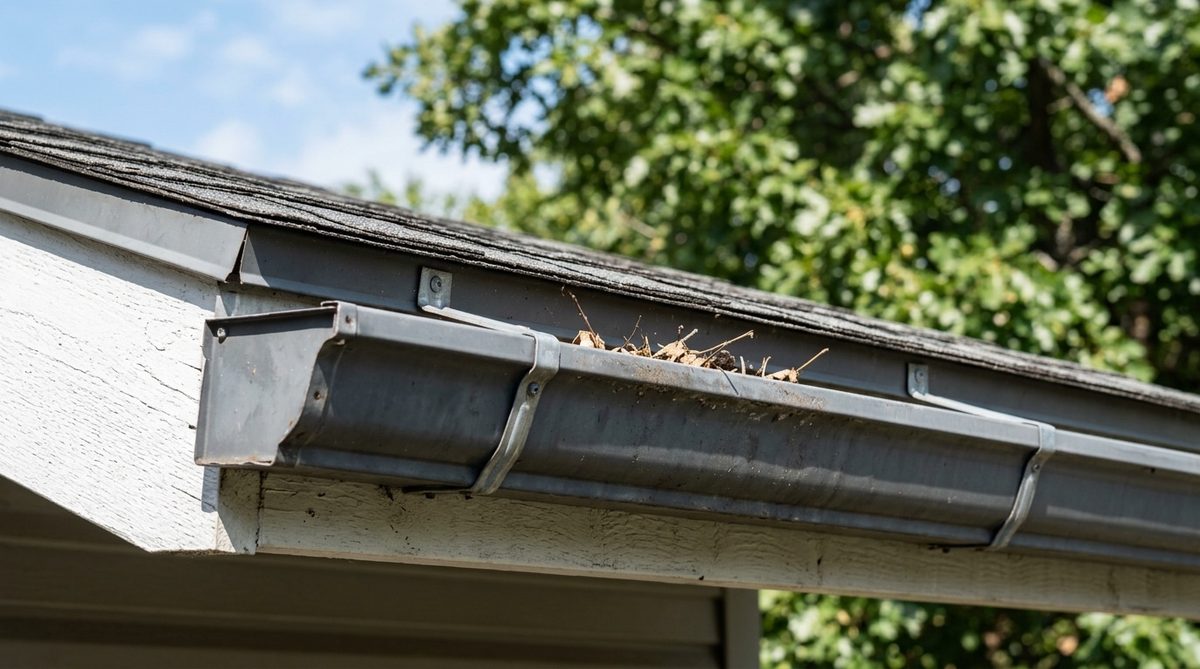
On a hot afternoon, the sharp clanking of metal coming from the roof was more than just a weather anomaly. This is a distress signal.
We tend to ignore these sounds. We tell ourselves that the house will just settle or the metal will expand in the sun’s rays. However, if you listen carefully, you will realize that this sound is the sound of a storm water drainage system under extreme mechanical stress. It is not harmless to ignore. Over time, this stress can cause joint damage, severe cracking, and permanent deformation.
Good news? You don’t need a contractor to fix it. No special tools required. With a ladder and a screwdriver, in about 10 minutes you can reduce stress, eliminate noise and protect your home from water damage before the next big storm hits.
Why do gutters scream on hot days
The reason is thermal expansion. Whether your drainage system is made of zinc, copper, aluminum or PVC, the material reacts to heat. When a section of gutter several meters long is exposed to direct sunlight, the gutter expands several millimeters.
If this expansion is stopped, it has nowhere to go. The pressure builds until a sudden jerking movement releases the pressure. This is why you hear loud clicks in your garden or living room. The system becomes too rigid and cannot withstand daily temperature changes.
This is more than a nuisance. This is destructive.
Continuous pressure can cause complete failure of zinc welds. Plastic parts can break from joints. This force also weakens every attachment point screwed to the wooden structure of the roof. Eventually, the entire part may sag under its own weight. A quick inspection now can prevent major renovations later.
Simple solution: relieve tension
The solution is simple. It’s about giving the material room to move. “play” or slack must be returned.
Here’s what you need:
* Strong and stable ladder
* a standard screwdriver
*your eyes
Start by scanning your gutters for bent, misaligned, or clearly blocked areas.
Expansion is often blocked in these.
This problem is often caused by the brackets being over-tightened during installation or warping by wind loads.
Step by Step Fix:
Look for a small space. Look for any fasteners or hooks that may pinch the gutter.
2. Slack off a little. Use a screwdriver to back off the screws on these brackets. Do not remove them.
Loosen it just enough to the bracket has a tiny bit of wiggle room.
3. **Check the movement. ** The chute must be able to slide freely a few millimeters from side to side on the support shaft.
4. ** Re-tighten gently. ** When the gutter is straight, tighten the screws again. However, don’t crank them down tight. Just secure them firmly to support the weight without restricting movement.
Releasing the mechanical grip allows the chute to expand during the day and contract at night. The clacking stopped immediately. The system is now quiet, smooth and working properly again.
Restore the slope and seal the joints
Loosening fasteners often does more than just eliminate noise. Automatically restores the correct slope of the gutters.
It needs to be tilted a little so that the water flows properly. A standard rule of thumb is about 5 mm drop per meter of gutter length. If you tighten the gutters too tightly, you can lose this pitch. When the water stagnates, the excess weight pulls the sagging area down, creating a vicious cycle.
After the tension has subsided, check the flow. The water should run smoothly from one end to the downspout. If it pools, adjust the brackets slightly to encourage gravity to do the work.
Finally, check the joints. Make sure all connectors with rubber seals are properly seated. These joints are designed to absorb movement while keeping water out. Correct tightening ensures watertight seal without limiting the ability to expand of the gutters.
Why this is important for façade
It’s not just silence. This prevents water damage to the exterior walls of your home.
A correctly inclined drainage system directs rainwater away from foundations and walls. If rain gutters break or overflow due to blockage or warping, water can run down your exterior walls. This can lead to staining, moisture and eventually structural rot and mold.
Taking 10 minutes to adjusting your brackets and checking your slope will give you major protection with little maintenance.
The next time you hear a metallic click on a hot day, don’t ignore it. Take a screwdriver. Fix the tension. Keep the water flowing.