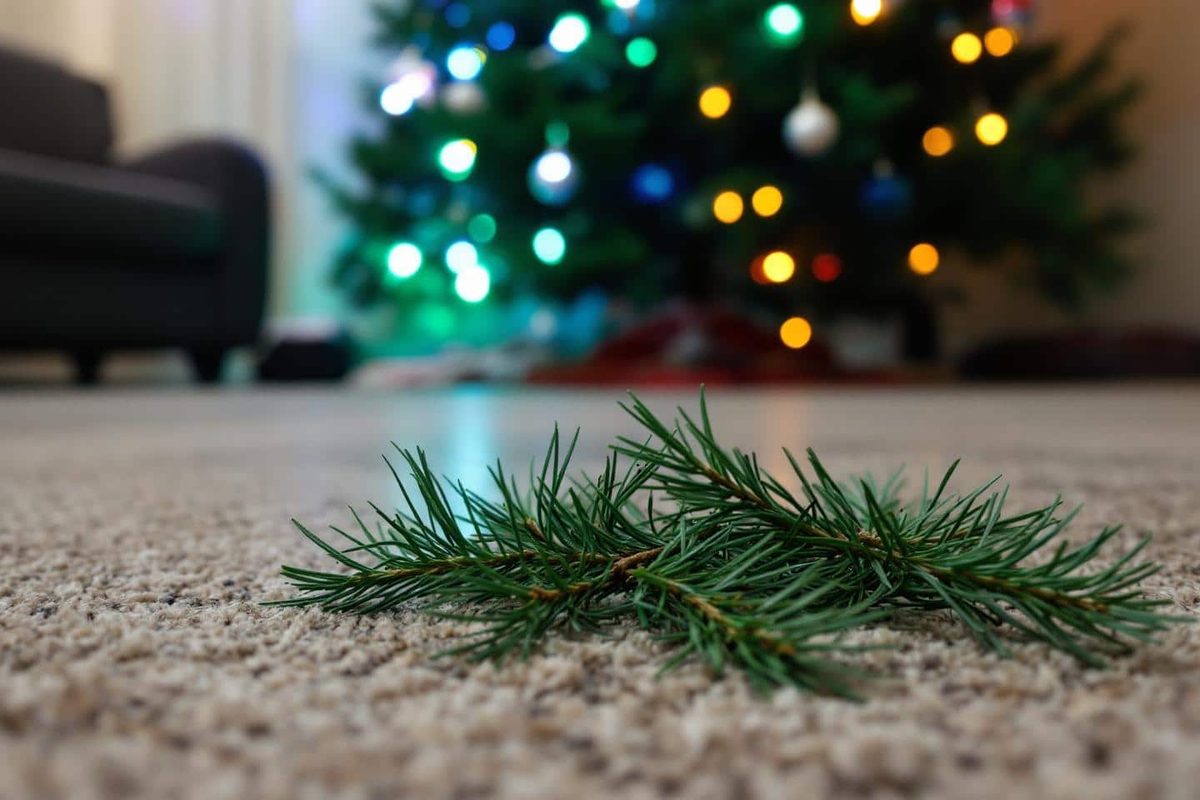
It’s that time again. The smell of pine trees fills the house. The lights come on. Then, two weeks later, your floor is covered in sharp needles. You vacuum them up. You try again. The tree sheds more.
Why is this happening? Even the best-kept trees turn into bare skeletons by mid-December. It feels like a small domestic tragedy. But it doesn’t have to be that way.
There are simple, proven ways to keep your tree green and needle-retentive until the epiphany. Here’s how it’s done.
Why does the Christmas tree lose needles
Every winter we see the same drama. You bring the King of the Forest home. You decorate it. Within a few days, it will begin to shed its “needle coat”. Parquet, carpet and even urban potted plants get poked.
It’s annoying. It’s chaotic. But the reasons are invisible.
Hidden Culprits Behind Needle Drop
Most of the Christmas trees sold today have traveled hundreds of kilometers. They were sitting in warehouses. They waited for days or weeks in trucks without real water.
Putting it in heat of the interior speeds up drying. Wood dries quickly. The needles are falling. Some varieties are simply less drought tolerant. They are fragile.
Common mistakes that will kill your tree
Many people forget one thing: the tree no longer has roots. It doesn’t get water from the ground. It needs to “drink” to stay green.
Leaving the trunk dry is a fatal mistake. Another option is to place the tree near a heat source – radiators, fireplaces, vents. Neglecting the first cut will seal the tree’s fate. These mistakes make the needle drop faster. They turn the festive centerpiece into a hazard.
Cutting the bottom: the forgotten step that changes everything
Freshly bought trees often have a dry, hard base. It looks like a dead tree. This detail seems insignificant. It is not. It has a major impact on the tree’s lifespan.
Why bevel cutting increases service life
The sap coagulates at the cut end of the trunk. It works like a cork. It prevents water absorption.
By making a fresh, clean, beveled cut you increase the absorption surface area. This opens up the tree fibers. They can drink the water they need to survive. This simple step, used by florists and experienced gardeners, is the first line of defense against premature needle loss.
How to cut a Christmas tree correctly
Grab a sharp saw. Don’t use dull one.
- Cut 2-3 centimeters off the bottom of the trunk.
- Cut it slightly at an angle (beveled), not straight.
- Place the tree immediately in a stand that holds water.
The base must never dry out after this step. This reflex ensures that the tree drinks completely from the start.
Magic Trick: Sugar or Baking Soda in the Stand
Professional growers protect the secret closely. It’s simple. It works. Add sugar or baking soda to the water in the tree stand.
That sounds weird. Grams of household ingredients change the tree’s longevity.
The surprising effects of these ingredients
Sugar gives the sap a boost. It supports water circulation in the trunk.
Soda slows down the growth of unwanted microorganisms. These microbes can prevent water absorption.
Both methods keep the tree hydrated. They make it shine. They ensure that it can withstand dry, heated indoor air for longer.
Sugar vs. baking soda: choice and measurement
You need clean water. You need an additive. Don’t mix them up.
- 1 liter of clean water
- 2 tablespoons of powdered sugar or 1 teaspoon of baking soda
Fill the stand tank with this solution. Replenish the mixture each time you add water.
Warning : Never mix sugar and baking soda. Choose one. Sugar revives. Baking soda protects. Choose what you have in your kitchen.
Hydration: The key to a great tree
A well-watered tree is the absolute secret to a tree that survives the holidays with dignity.
Most people underestimate how quickly water evaporates. And how quickly the tree withers.
Frequency and quantity: The truth about watering
During the first three days, the tree can drink up to 2 liters of water per day. You must check the water level in the morning and night. Never let the base dry out.
After that, plan on 1 liter every day. Adjust the room heat and the size of the trunk. A bigger tree is hungrier.
Warning signs to watch out for
Dull needles? Hanging branches? A dry trunk to the touch? These are early warning signs.
Act immediately. Water it. If necessary, recut the base at a bevel. Properly moistened tree retains its fullness. Even after Christmas Eve.
The needles stay in place. Green stays bright. It just needs a little attention.
Most people think of Christmas trees as decorations that expire on January 1st. This is wrong. You can keep your tree lush, fragrant and solid even after the holidays or during the epiphany. No expensive preservatives or botany degree required. All that is required is to respect the biology of a cut pine.
Positioning and initial preparations
The first mistake is the location. Avoid placing trees near radiators, fireplaces and drafty corridors. Heat accelerates water loss. Cold air can cause the needle to drop. Choose a place away from direct heat sources where you can enjoy the view.
When you bring the tree home, be quick. The clock starts ticking from the moment the saw hits the bark.
If you buy a freshly cut tree, it can be felled on site. If not, or if you left it out for a day, you need to cut a new slice from the bottom. This is not negotiable. The juice closes the stem end in a few hours, preventing water absorption. Use a saw or sharp ax. Cut about one to two inches from the bottom. A diagonal cut works well, but a flat, clean cut is better for stand stability. Do this before placing it in the stand.
Water strategy
A Christmas tree is basically a giant straw. If the straw gets clogged, the tree dies. If the straw is open, it drinks.
Your tree stand must hold water. And it must be full.
Most stands hold 3-5 gallons. Check the water level daily. During the first week, a fresh tree can drink up to 1 gallon of water per day. Yes, really. it settles down in the second week, but you still need to be careful. If the water level is below the bottom, air will be sucked into the trunk. The seal reforms. The tree stops drinking. You need to cut the base again. Don’t do it. Keep the tank full.
Sugar, baking soda or plain water?
This is where myth meets reality. For decades, gardeners have debated whether to add commercial preservatives, sugar or baking soda to water.
Simply put, ordinary tap water is suitable for most households. Long answer: Additives can help if you want to squeeze out more freshness, but they aren’t magic.
- Sugar: Some studies suggest that sugar feeds bacteria that can clog the stem. Some believe that trees help sustain themselves. This is gambling.
- Baking Soda: This helps balance the pH of the water and can slow the growth of bacteria. It’s very cheap and easy, just add a tablespoon.
- Commercial Preservatives: These usually contain biocides and acids. Although effective, it is not necessary for trees that only last a few weeks.
If you add something, keep it simple. A pinch of baking soda or a tablespoon of sugar also works. But don’t overcomplicate it. The most important factor is the hydration, not the chemistry.
Signs of trouble
Watch the tree. Really watch it.
Are the needles turning brown? It’s dehydration. Needles dropping excessively when you walk by? It’s stressful. If you notice b