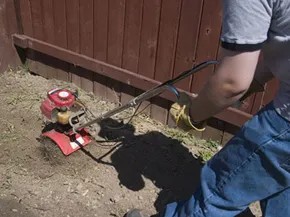
Tilling is messy. Dirt can get into the gaps. The roots are wrapped around the axles. The engine Dust coats the engine. If you handle the tiller like a push mower and walk away, you will damage it. You have to deal with it differently. The first rule is simple. “Keep it clean.”
After plowing, hose it off. Remove mud from tines. Cut off any vines or roots that have wrapped around the axles. This is basic machine hygiene. Failure to do so may result in rust or imbalance.
Sharpening Tines for Better Performance
Tines go dull. Rocky soil speeds up this process. Dull tines will stir up the soil, but don’t cut cleanly. Waste your energy and time. You can solve this problem yourself.
For light mini cultivators and smaller front tine models, you can flip it over. Use a metal file. Move it along the edge of the blade. Keep the angle constant.
Large cultivators are heavy. Do not try to turn them over. You may hurt your back or damage the machine. remove the blades. Clamp in a vise. File it there. It’s safer. It’s more precise.
If this seems too technical, leave it to the experts. If you perform regular maintenance, annual maintenance is reasonable. You pay for expertise and safety.
Change the oil and air filter
Dirt and dust can enter the engine. This is bad news. You must change the oil and air filter regularly. Most homeowners can do this. This is not rocket science.
Start with the oil. Locate the drain plug near the bottom of the oil reservoir. Wait until the engine warms up. Warm oil drains faster. Pour into the oil pan. Replace the plug. Fill with oil of the recommended grade.
Start the engine. Run it at idle for 30 seconds. Stop. Wait another 30 seconds. Check the dipstick. The oil should reach the full mark. Dispose of used oil at a recycling center. Do not pour it down the drain.
The air filter is next. Check the correct type in the user manual. Most filters come in a plastic box that is easy to remove. Change it. This will take 数分.
Change the air filter every 18-20 hours of use. Or once a year. Whichever comes first. Change the oil once a year. Unless you use the tiller more than 50 hours a year. Then change it more often. The owner’s manual has detailed instructions. If you’re not sure, hire someone. There is nothing to be ashamed of.
Winter storage and fuel maintenance
The season is over. Garden work completed. Cultivators must be stored properly. Empty the air oil reservoir. This prevents old fuel from clogging the carburetor.
If you can’t empty the tank, don’t force it. Buy a fuel stabilizer. Add to oil reservoir. Follow the instructions. Prevents gas from going bad in the off-season.
Store the cultivator in a dry and shady place. A basement or shed is best. Sunlight can damage tires. Moisture causes rust. Keep it dry. Keep it clean.
This is part one of maintaining your tiller. There is more information about engine tuning and seasonal maintenance. But if you start here, you’ll be ahead of the curve. Your machine will last longer. Your garden will thank you.