Your aloe might look sad. Maybe the leaves are shrinking. Maybe they’re translucent and soft. It’s likely you’re overwatering.
Everyone loves an aloe vera plant. Beginners like the ease. Experts appreciate the aesthetic. It’s a succulent that promises healing, beauty, and low stress.
But there’s a trap. The watering routine isn’t just “water when you feel like it.” If you ignore the specifics, your plant dies. And it’s boring to watch.
Here is the no-nonsense breakdown on how to keep your succulent alive without drowning it.
When to Water an Aloe Vera Plant
People argue about watering frequency online. It’s a constant debate. But for a single houseplant? Do it right, or don’t do it at all.
Aloe is low-maintenance. That is true. But water is where it breaks down. Like all succulents, it hates wet feet.
The Golden Rule: Do not water until the soil is completely dry. Not damp. Not slightly moist. Dry.
Check the surface. Push a finger an inch deep. If it sticks, wait.
The Summer Routine
In summer, growth spikes. Your aloe wants more water. But not much more.
Water about once a week. That’s a guideline, not a law. Test the soil. If the top inch is bone dry, soak it thoroughly.
Use the right soil. Standard potting mix is a death sentence. Use a cactus or succulent blend. These contain sand and gravel. They drain. You need drainage.
Many keepers take their potted aloe outdoors. Good idea. Sun helps. But shield it from rain. Nature is unpredictable. You need control.
Too much water in summer causes root rot. Leaves turn mushy. They change color. It’s ugly. Prevent it by controlling the intake.
The Winter Slow-Down
Winter changes everything. The plant goes dormant. Growth stops. Metabolism slows.
If you watered heavily all summer, it might not need water at all in winter. This sounds extreme, but succulents store moisture.
If you must water, do it lightly. Every three or four weeks. That’s usually enough. More than that invites trouble.
Indoor care matters now. Move it by a sunny window. Bright, indirect light. Keep it away from drafts. Heating vents are enemies. Cold drafts are worse.
If you keep it outside in a mild climate, add gravel around the base. Rain can be excessive in winter. Gravel helps it drain faster. Prevent pooling.
How to Actually Water It
Don’t overthink it. But don’t guess either.
- Check dryness first. Always.
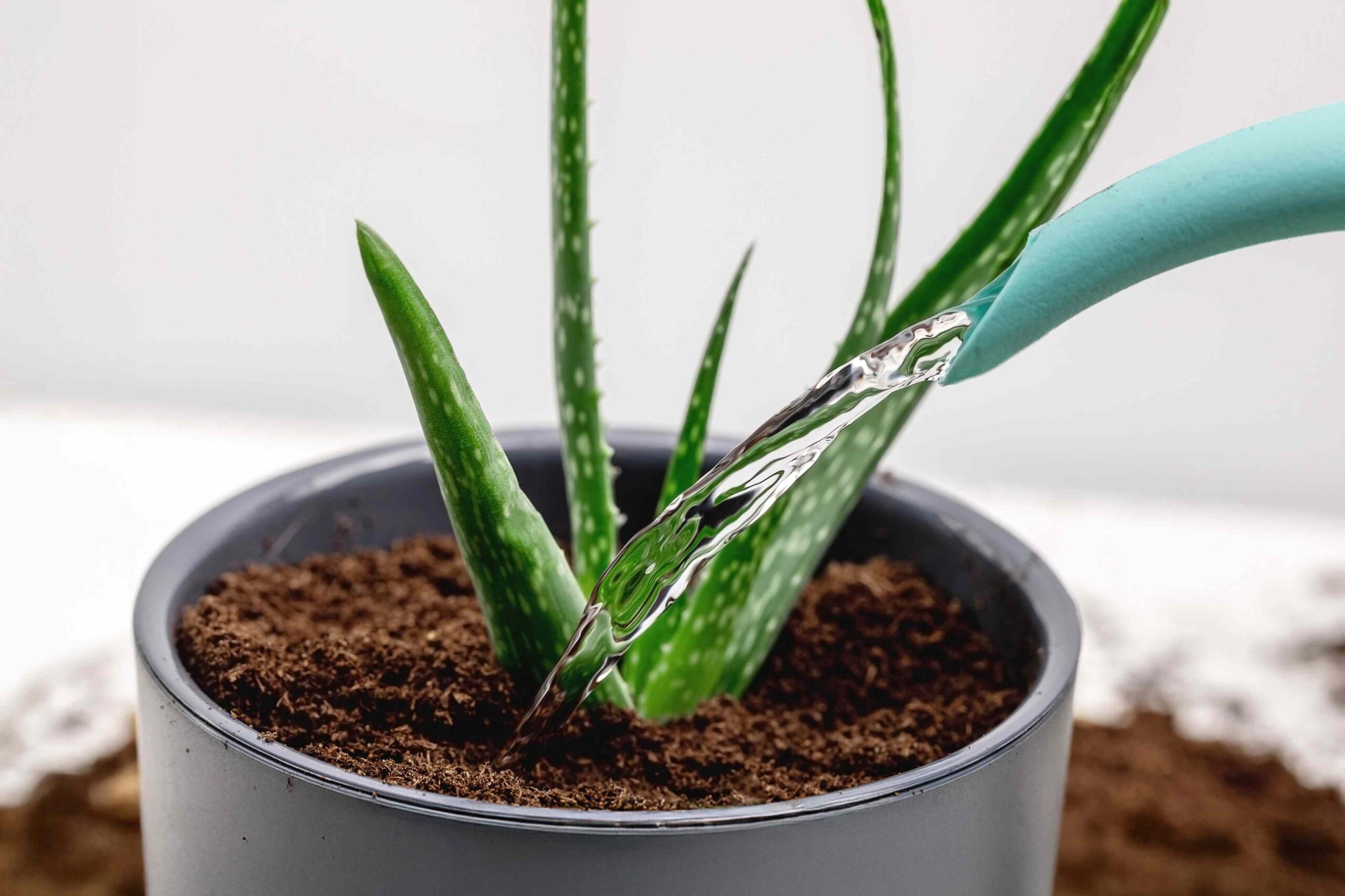
- Water slowly from the top. Soak until damp, not soaking. Stop before it pools.
- Observe. Watch how it reacts. Touch the soil later to gauge timing.
It’s a loop. Water, watch, repeat.
Top Watering vs. Bottom Watering
You’ve heard you should bottom-water most plants. It stops soil-borne disease. It keeps leaves clean. No splashing on the foliage.
For aloe? Top watering is fine if you are careful. You don’t need a sink bath.
Use a watering can. Pour slowly. If you have a tray underneath, let excess drain into it. Discard the runoff. Never let the pot sit in standing water. That’s how root rot starts.
4 Signs You Are Killing It (With Water)
Overwatering is the #1 killer. Here is what it looks like.
- Yellow leaves. Not from lack of sun. From lack of oxygen in the roots.
- Bloating leaves. The plant is swelling with excess water. It’s stressed.
- Mold or mildew. Smelly, fuzzy patches on the soil.
- Root rot. Black, mushy roots. The plant cannot uptake nutrients. It starves while drowning.
Avoid these by sticking to the dry soil rule. Your aloe is a survivor. It can handle neglect. It cannot handle your affection in the form of a watering can.
Check the soil. Wait. Water sparingly. Let it thrive.