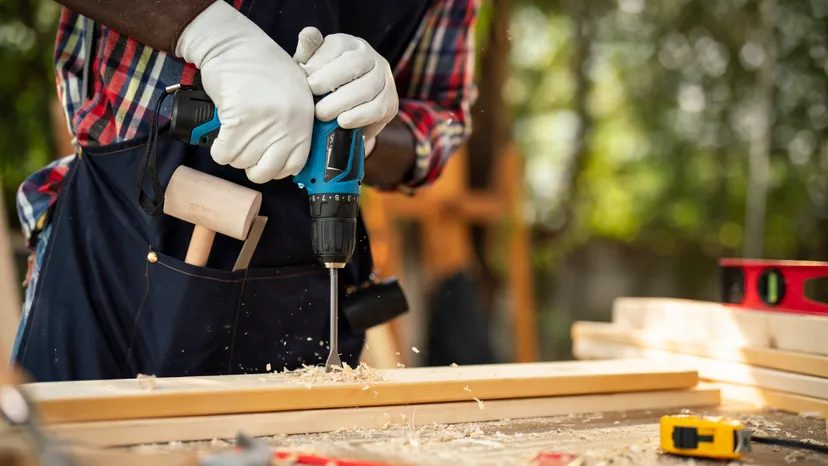
Most homeowners assume any drill bit works for any hole. That is a dangerous assumption. You can use standard twist bits, but they are not built for the job. They lack the geometry to clear debris efficiently. If you use one, you have to stop constantly. Pull the bit out. Clear the chips. Then go back in. It wastes time. It also creates friction. Friction creates heat. Heat burns wood.
Specialized wood bits exist for a reason. They have a sharp point. Standard metal bits are blunt. A blunt bit crushes fibers rather than cutting them. A sharp point guides the drill straight. That precision matters.
Choosing the Right Bit for the Job
The type of bit determines the quality of the hole. It also determines how much effort you put in.
- Flat wood bits : These are for larger holes. They cut wide swaths. They are not ideal for small, precise work.
- Spur point bits : Use these when you need smooth sides. The spurs score the wood before the blades cut. That prevents tear-out.
- Auger bits : These are the heavy lifters. They work in both hard and soft woods. The fluted cutting edge is the key feature. It pulls chips out of the hole as it drills. The hole stays clean. You don’t have to stop and dig out debris.
- Standard twist bits : Save these for metal or plastic. If you must use them in wood, expect to clean out the hole frequently.
Technique Matters More Than Speed
You can have the best bits in the world. It won’t help if you drill crooked. Precision is the goal. The bit must go in straight. Use steady pressure. Do not force it. Do not rush it.
If you drill on an angle, you risk splintering the wood. The edges will chip. The hole will be ugly. A crooked entry point often means a crooked exit. That is useless for joinery.
Speed is the enemy of clean wood. Drill too fast and the bit generates heat. The wood burns. That dark ring around the hole is a mark of failure. It weakens the connection if you are inserting a screw or bolt later.
“Drilling in wood requires precision so the wood won’t shatter or splinter.”
The cut must be clean. The bit must be sharp. The angle must be square. The speed must be controlled.
Why Sharp Points Prevent Tear-Out
The difference between a sharp point and a blunt end is structural integrity. A blunt bit pushes wood fibers aside. It crushes them. Crushed fibers splinter when the bit exits the other side. Sharp points slice through fibers. They cut cleanly. That means smoother edges. Less sanding. Less waste.
When you select a bit, look for the geometry. Flat bottoms? Good for depth stops. Spurs? Good for edge quality. Fluted augers? Good for chip removal. Match the tool to the task.
Stop using twist bits for wood unless you have no other option. The extra stops to clear debris will frustrate you. The burning will ruin your project. Spend a few extra dollars on the right bit. Use steady pressure. Keep it straight. The result will be clean. Professional. Ready for the next step.