Winter turns a simple load of laundry into a logistical nightmare. You pull your sweaters from the washer. They are heavy, cold, and damp. In July, they would be dry by noon. In January? They hang there like wet towels for days.
This isn’t just an inconvenience. It’s a hygiene issue. Damp clothes breed mildew. The smell is distinct. It lingers in the closet. It ruins the vibe of your home.
You don’t need to buy a dryer to fix this. You just need to understand how water leaves fabric. And you need to move air.
Here is how you speed up the process.
Maximize Spin Power
The biggest mistake people make is assuming the washer does enough work. It doesn’t. Most modern washers have a high-speed spin cycle. Use it.
If your clothes come out sopping wet, the drying time doubles. Triple it.
- Check your settings. Look for “High Spin” or “Extra Spin.”
- Balance the load. An unbalanced drum slows down the spin. Add or remove items until it feels even.
- Don’t overload. You need room for water to be centrifuged out. If the drum is stuffed, the water stays trapped in the fibers.
Think of it this way. You are removing the bulk of the water mechanically. The rest is left to physics.
Create Airflow, Not Just Space
Line drying works by evaporation. But evaporation needs movement. Still air gets saturated with moisture and stops working.
Hang your clothes outside if you can. Even a cold, dry winter day is better than stagnant indoor air. If you must dry indoors, you have to force the issue.
Use a fan. Point it directly at the clothes. Not at you. At the laundry.
A box fan or a ceiling fan on low can cut drying time by half. It disrupts the boundary layer of humid air clinging to the fabric. It pushes dry air in. It takes the moisture out.
“Still air is your enemy. Moving air is your friend.”
Space Out the Clutter
Humans are bad at spacing things out. We want to hang every single sock. We want to drape shirts over the line without thinking.
This blocks light. It blocks air. It creates pockets of dampness.
- Use wide hangers. Spread the shoulders of shirts and jackets.
- Leave gaps. Let each item breathe. If two shirts are touching, neither will dry efficiently.
- Flip the heavy items. Jeans and towels take longest. Turn them inside out after an hour. This exposes the inner layer to the air.
Use the Radiator Trick (Carefully)
Some people hang clothes over radiators. Be careful. This can damage the finish of the radiator. It can also warp wooden floors if water drips.
If you do this:
- Use a drying rack. Place it near the heat source, not directly on top of pipes.
- Monitor humidity. Running a humidifier in winter is common. Adding wet laundry to the mix can cause mold in walls if ventilation is poor.
- Check for burns. Synthetic fabrics can melt or shrink near
Spinning clothes harder isn’t just about getting them drier. It’s about cutting the time your laundry sits in the hamper. The first move is aggressive water removal.
Use the highest spin speed your washing machine offers. Do this only if the fabrics can handle it. Delicates? Skip the high RPM.
For hand-washed items or fragile fabrics, skip the machine entirely. Wring them out by hand first. Twist tightly to push out the bulk of the water. Next, lay the garment flat on a dry, absorbent towel. Roll the towel up with the clothes inside. Squeeze hard. Twist the roll from one end to the other. Keep twisting until the towel is saturated.
This method works because the towel wicks moisture away from the fibers. If the towel gives up, swap it for a dry one and repeat.
Small items like socks or underwear have a shortcut. Drop them into a salad spinner. The centrifugal force extracts water faster than twisting. Once spun, they dry rapidly.
Space Out Clothes on the Drying Rack
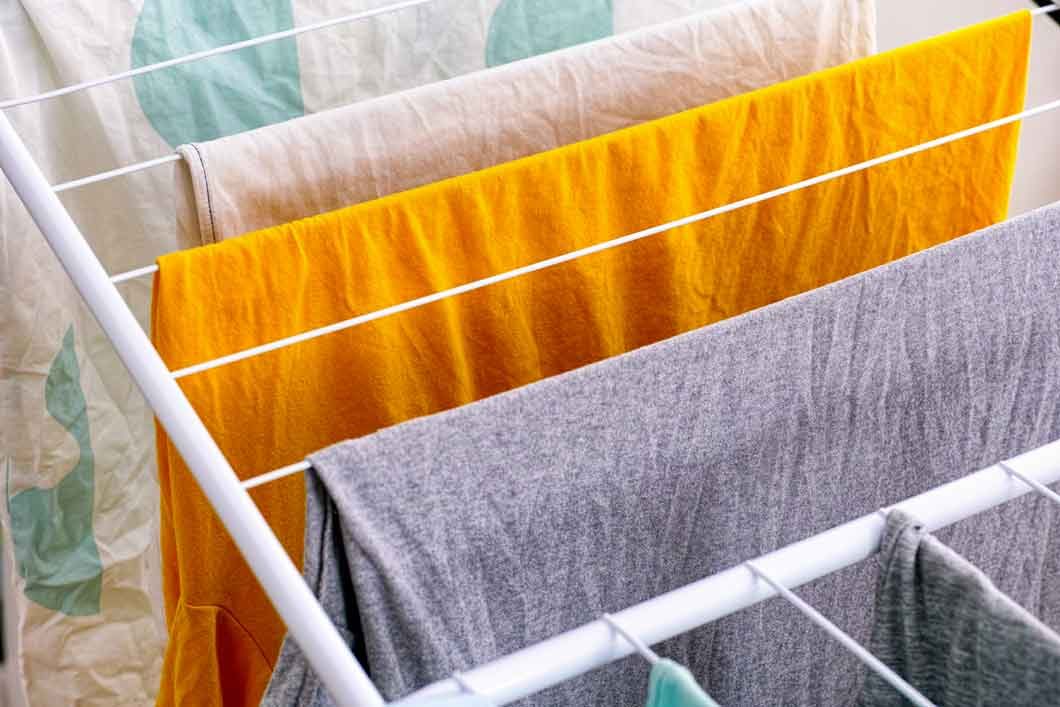
Crowded laundry is slow laundry. When items touch, air cannot circulate. Moisture gets trapped between layers. The drying time doubles.
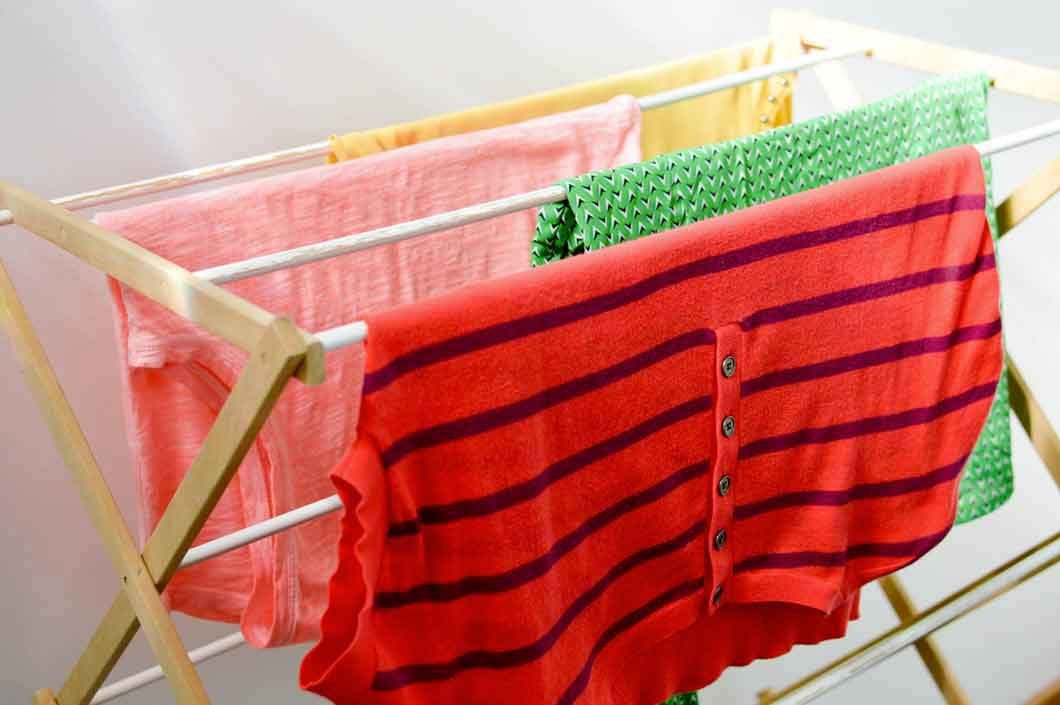
Separate each piece. Give clothes room to breathe. Use every inch of the drying rack. If you need more space, use a second rack or a different line. Don’t pack them in.
Good airflow is the engine of fast drying. Let the air do the work.
You don’t need a dedicated laundry room to get clothes dry quickly. You just need to move them.
Stop waiting for one load to finish before starting the next. If you have only one spot for drying, get creative. Use coat racks. Hang garments from door frames. Drape shirts over the top of your shower rod. Or stretch a line directly across your bathtub.
The logic is simple: air circulation matters more than surface area.
Hang things higher up. The air tends to be drier and warmer near ceilings and upper walls than it is at floor level. Moist air sinks. Dry air rises. Let gravity work for you.
Place Dryers Near Heat Sources (But Not On Them)
Location dictates speed. Put your drying setup near a heat source. A sunny window helps. A radiator provides gentle warmth. A fireplace adds ambient heat if you have one.
But here is the catch.
Do not hang wet clothes directly over a heater or into an open oven. It is a fire hazard. The fabric can catch or melt. It also damages the heating element. Keep a safe distance. Let the radiant heat warm the room and the air around the clothes. That is enough.
Use a Fan to Push Moisture Away
Air stagnation is the enemy of drying.
If you have a standing fan or a box fan, point it at the hanging clothes. You aren’t trying to freeze them. You are trying to break the boundary layer of humid air clinging to the fabric. Moving air evaporates water faster. Period.
It’s basic physics. Humid air holds less water than dry air. By blowing air across the wet surface, you replace that saturated air with drier room air. The cycle continues until the fabric is dry.
Ventilate the Room
This step is non-negotiable for indoor drying.
Open a window. Just a crack is fine. You need to let the moisture escape the room. If you seal the space tight, the relative humidity hits 100%. Clothes stop drying. Instead, they sit there. Damp. Heavy. Smelling like mildew.
Bad odors come from bacteria growing in wet, stagnant fabric. Proper ventilation prevents this. It also speeds up the process by keeping the ambient air drier.
Shake Out Wrinkles Before Hanging
High-speed spin cycles wring out water but they also crumple fabric.
When you pull a shirt from the washer, don’t just toss it on the line. Give it a firm shake. Smooth it out. Pull at the seams.
Why does this matter?
Wrinkles trap moisture. Water gets stuck in the folds. It evaporates slowly. Flat, smooth fabric exposes more surface area to the air. It dries faster. You also save time on ironing later. If it’s already flat, you might not even need to press it.
Use a Hairdryer for Quick Fixes
When you are in a hurry, a hairdryer is your friend.
It works, but it is tedious. Use it for spot-drying or finishing touches.
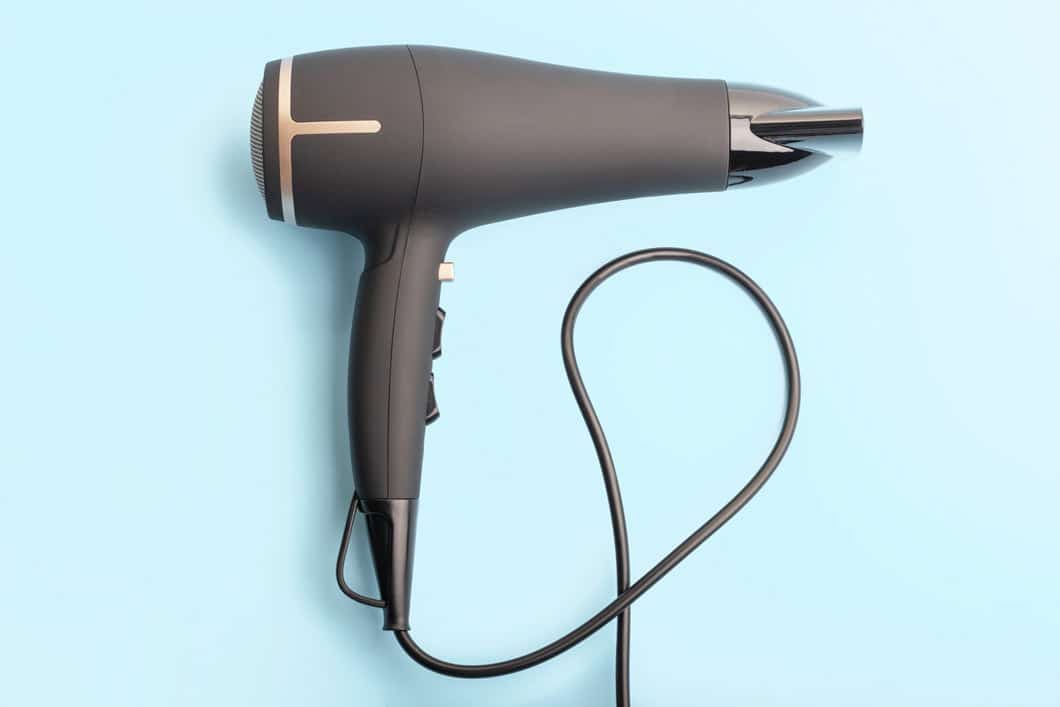
Start with a spin-dried item. Hold the dryer a few inches away. Move it constantly. Do not hold it in one spot. You will scorch the fabric. Blow from the inside out if possible, like into a sleeve or the torso of a shirt.
This method struggles with thick jeans or towels. It takes too long. Use it on items that are still slightly damp, not soaking wet. Finish the job. Save the machine’s heavy lifting for the bulk of the moisture removal.
The Reality of Indoor Drying
Indoor drying is efficient if you treat it like a system.
You control the airflow. You manage the heat. You remove the humidity. Ignore any of those three variables, and you end up with damp clothes and a moldy bathroom.
Using an iron and towel for quick drying
If you need a garment dried in a pinch and have a dry cleaner’s iron (or a powerful household one) nearby, there is a trick that uses basic physics. Lay the damp item flat on your ironing board. Place a clean, dry towel directly over the wet fabric. Crank your iron to its highest heat setting. Press down on the towel, not the clothes.
The heat concentrates in the thick cotton of the towel. It acts as a heat sink and absorbent layer. The residual moisture in the shirt or pants migrates into the towel fibers. Steam escapes into the air instead of sitting in the weave of your actual clothes.
Warning. Do not press the hot metal directly onto the damp fabric. Water conducts heat aggressively. You risk scorching the material or causing thermal shock to delicate fibers. The towel acts as a buffer. Keep it between the iron and the garment.
Drying small items in your oven
Yes, your kitchen oven can serve as a dryer. This method is not for your winter coats. It is strictly for small, low-mass items. Think socks. Undershirts. Cotton briefs.
Synthetic blends are a no-go. Nylon and polyester melt at relatively low temperatures. You will ruin the garment and potentially your oven’s interior. Stick to natural fibers. Cotton and wool can handle the gentle heat.
Set your oven to its lowest possible temperature. Often labeled “Warm” or around 150°F (65°C). Prop the door slightly open if your model allows it. This lets moisture escape. If you seal it tight, you are just steaming the socks. Lay the items on a baking sheet. Line it with parchment paper to prevent sticking.
Check them frequently. Small items dry fast. You want them warm and dry, not brittle or singed. Remove them while they still hold a bit of body heat. This prevents static and makes folding easier.
Which method saves more energy?
Neither of these hacks is efficient for large loads. Your dedicated dryer or a clothesline will always win on energy costs and capacity. These tricks are for emergencies. A date tonight? A sudden rainstorm? A broken dryer?
The iron-towel method works for one or two items. It requires attention. You cannot walk away. The oven method takes longer but can handle a few pairs of socks at once. It does not require constant monitoring after the initial setup.
Consider the fabric care label. If it says “tumble dry low,” the oven might be too harsh even at its lowest setting. If it says “dry flat,” the iron method is safer than the heat of an oven. Read the tags. They know your fabric better than you do.
Safety first
Heat is unpredictable. Towels can catch fire if left too long near high heat sources. Oven socks can fall behind racks and become a fire hazard. Never leave these processes unattended.
Keep a fire extinguisher nearby if you are using high heat on fabrics. It sounds extreme, but cotton and linen are fuel. They ignite easily when dry and hot. A single spark or overheated element can turn a laundry hack into a disaster.
Also, clean your ironing board cover regularly. Residual starch or detergent buildup can smoke or burn when covered by a hot towel. Scorch marks on your ironing board are permanent.
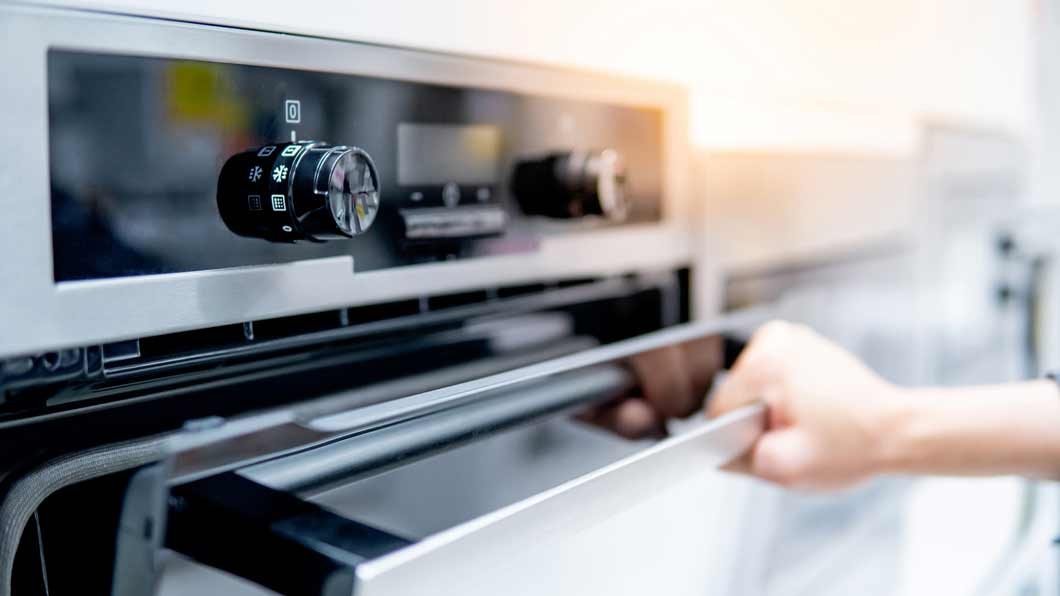
Using the Oven for Delicate Items
Heat your oven to 100°C. Place wet, small garments on a clean baking sheet. Once the temperature is stable, turn off the heat completely. Slide the tray in for at least an hour.
Never put clothes in an operating oven. Dry fewer items at once to speed things up. Open the door briefly every so often. Let the steam escape.
FAQ
How to dry clothes in the oven?
Set the oven to 100°C. Turn it off. Place wet clothes on a clean tray. Leave them inside for an hour or more.
Is it safe to dry clothes in the oven?
Yes, but only if the oven is off. Never dry clothes in a running oven.
How to remove musty smells from clothes?
Try these methods:
– Baking soda in the wash
– White vinegar rinse
– Sun drying
– Lemon juice soak
– Activated charcoal bags
– Essential oils