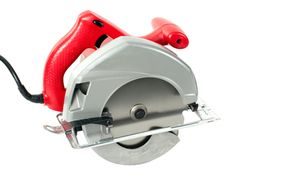
Circular saws are the workhorses of any serious DIY shop. They cut through wood, metal, and plastic with equal ease, provided you pick the right blade. But they are also dangerous if you treat them like a toy. You need to know how to set them up, how to hold them, and how to keep them running so they don’t turn your weekend project into an ER trip.
These tools come in two main flavors: corded and cordless. Both have their place. Corded models offer consistent power for heavy framing or long rip cuts. Cordless ones give you the freedom to climb a ladder or move around a tight job site without tripping over a cord. The blade is what does the actual work, spinning at high speeds to slice through your material.
Understanding the Circular Saw Anatomy
Before you even think about making a cut, you need to know what you’re holding. A circular saw is electric, meaning it has a motor that spins a flat, round blade. The handle houses the on/off trigger. That trigger is your lifeline. If you let go, the saw should stop. Or at least, it should try to.
Look at the arbor nut. That’s the bolt in the center that holds the blade in place. You’ll need a wrench or a hex key to tighten this. If this isn’t tight, the blade can wobble, jump, or worse, fly off. Then there are the guards. These metal or plastic covers retract as you push the saw into the wood, then snap back to cover the teeth when you lift it out. Never remove the guard. Seriously. Don’t do it.
Most saws also have depth and bevel adjustments. The depth dial lets you set how far the blade sticks out below the wood. You only need about 1/4 inch of blade exposed for most cuts. More than that increases the risk of kickback. The bevel adjustment lets you tilt the saw for angled cuts, usually up to 45 degrees. Check your manual for the specific range of your model.
Safety First: Gear and Setup
You cannot overstate the importance of eye protection. Wood chips and metal shavings fly at high velocity. Regular glasses aren’t enough. Get safety goggles that seal around your eyes. Hearing protection is a good idea too, unless you enjoy ringing in your ears.
Gloves? Be careful here. Loose gloves can get caught in the spinning blade. Tight-fitting work gloves are fine for handling rough lumber, but keep them away from the moving parts.
When setting up your cut, pick the right blade. A blade for wood won’t cut metal well, and a carbide-tipped blade for wood might chip if used on brittle materials. Secure the blade with the arbor nut. Tighten it firmly.
Adjust the sole plate. Set the cutting height so the blade barely clears the bottom of the material. Adjust the bevel if you need an angle. Plug in a corded saw or charge your cordless one. Inspect the cord for frays. Check the blade for cracks. If anything looks wrong, stop.
Making the Cut
Stand firmly. Plant your feet. Hold the saw with both hands if possible. The right hand on the trigger, the left on the front handle. Align the blade near your mark. Not on it. Let the blade reach full speed before it touches the wood.
Press the safety lock, then pull the trigger. Push the saw forward slowly. Let the blade do the work. Don’t force it. If the motor bogs down, you’re pushing too hard or the blade is dull.
Watch the cut. If the kerf (the slot the blade makes) starts to close and pinch the blade, the wood might twist. This can cause kickback. The saw jumps toward you. Hard.
As you reach the end of the cut, support the off-cut piece. If the wood is unsupported, the weight can cause the far end to drop or splinter. It can also pinch the blade, leading to that dangerous kickback. Keep your hands clear of the spinning teeth. They are sharp. They will cut you.
Keeping Your Saw Running
Sawdust is the enemy of moving parts. It gets into the motor vents, the gears, and the blade bearing. It causes friction. It causes heat. It causes failure.
After every job, take an unused paintbrush or a can of compressed air and blow out the dust. Don’t just brush it off the outside. Get into the cracks. If you have a cordless saw, check the battery contacts for debris.
Blades dull over time. A dull blade burns the wood and requires more force to push. If you have a high-quality blade, take it to a professional sharpener. It’s cheaper to sharpen than to replace high-end carbide blades. For cheap blades? Replace them. Don’t bother sharpening them. You’ll waste more time than you save.
Related Tools and Alternatives
Circular saws are great for straight cuts. They aren’t so good for curves or intricate shapes. For that, you might look at a saber saw. Saber saws have reciprocating blades that move up and down, allowing for more flexibility. They are also safer in some ways because the blade is smaller and less likely to catch and kick back.
Reciprocating saws are the demolition tools. They are ugly, loud, and powerful. Use them for cutting through nails embedded in wood or tearing out old fixtures. They don’t make pretty cuts. They make fast ones.
Hand saws still have a place. If you don’t have power, or if the space is too tight for a bulky electric saw, a good quality hand saw can make precise cuts. Just expect to burn some calories.
Choosing the Right Saw for Your Project
Not all circular saws are created equal. When shopping, look at the motor power. For corded saws, this is measured in amps. 15 amps is standard for heavy-duty work. 12 amps might struggle with hardwoods or thick beams.
For cordless, look at the voltage. 18V or 20V platforms are common. Higher voltage means more torque. If you’re cutting framing lumber frequently, stick with a higher-end model. For occasional trim