You have probably walked past one without thinking twice. Those smooth, stucco-like walls on modern apartments or office parks? That is likely Exterior Insulation and Finish System, or EIFS. It looks like concrete. It mimics traditional stucco. But it is a completely different beast.
If you are a homeowner thinking about renovating your façade, you need to know what this stuff actually is. It is not just paint and plaster. It is a layered wall cladding system. You get stiff insulation boards on the outside of your wall structure. Then a plaster-like skin covers it all up.
Think of your home’s existing insulation as thermal underwear. It goes under the main layer to keep you dry and warm. EIFS is like wearing a heavy shirt over your coat. It is an extra layer on the exterior.
This system is everywhere. From single-family homes to grocery stores and government buildings. It is common across the United States. But it is not all sunshine and savings. There are serious risks involved. If you are considering this for your own house, you need to understand the mechanics before you pick up a trowel.
How EIFS Works and Where It Came From
The story starts in post-World War II Germany. Buildings were destroyed. They needed a fast, lightweight way to resurface structures. EIFS was born out of necessity there. It crossed the Atlantic and arrived in the U.S. in the late 1960s.
The basic anatomy is simple but critical.
- Insulation Boards: Panels of polystyrene foam (EPS or XPS) are attached to the sheathing.
- Base Coat: A synthetic plaster layer is applied over the foam.
- Reinforcement: Glass fiber mesh is embedded into the wet base coat. This adds strength.
- Finish Coat: A textured, colored acrylic topcoat provides the final aesthetic.
The whole assembly is incredibly thin. The coatings and mesh add only a fraction of an inch to the wall. But that thin layer does a lot of heavy lifting.
There are two main types of EIFS with Drainage. Some systems rely solely on the outer barrier to keep water out. These are called “barrier” systems. Others have a secondary drainage plane behind the insulation. If water gets in, it drains out. The drainage type is safer. The barrier type is riskier. Most modern codes require drainage systems for residential use.
Why Homeowners Choose EIFS
It is not just about looks. There are tangible benefits.
Energy Efficiency
Properly installed EIFS improves your home’s thermal envelope significantly. Oak Ridge National Laboratory data suggests structures with this system can cut energy bills by 20% to 30%. You are essentially wrapping your house in a blanket. The insulation is continuous. There are no thermal bridges through the studs.
Design Freedom
Expanded polystyrene is soft. You can cut it. You can mold it. Want arches? Columns? Ornate window details? Sculptural soffits? EIFS makes it possible. Traditional stucco is harder to shape on-site. Foam can be pre-cut in a factory.
Space and Cost
The insulation goes on the outside. It does not eat into your interior square footage. This matters on small lots or in historic districts where every inch counts. In some cases, the material cost is lower than brick or stone veneer.
Installation Flexibility
Adhesives used in EIFS have temperature limits. They fail in extreme cold or heat. But manufacturers can make panels indoors in a climate-controlled warehouse. The adhesive dries there. Then you crane the ready-made panels onto a building in the middle of winter or summer. It bypasses weather delays.
The Hidden Danger: Water Intrusion
Here is the catch. You skipped the warning.
EIFS is a thin layer. It is not as robust as brick. It is not as thick as concrete. Water is its enemy.
When EIFS is installed correctly, moisture stays out. But if there is a crack, a failed seal around a window, or poor flashing details, water gets behind the foam. It has nowhere to go in a barrier system. It sits there. Rotting the wood sheathing. Ruining the structural integrity of your home.
This is why the drainage system matters. If you are doing this yourself, you cannot miss a single detail.
DIY Considerations for Exterior Insulation
Can you install EIFS on your own house? Technically, yes. But it is not a weekend project.
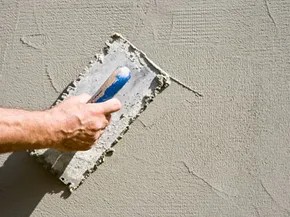
Plastering contractors often do this by hand on-site. They mix the base coat. They embed the mesh. They trowel the finish. It requires skill. The surface must be perfectly flat. The mesh must be centered in the base coat. If it sits too high, it shows through. If it sits too low, the wall lacks strength.
Factory-made panels are another option. These come pre-assembled. You attach them with adhesive or mechanical fasteners. This is faster. It is less dependent on weather. But you still need to handle the flashing. You still need to seal every joint. Every corner. Every window and door opening.
“EIFS is architecturally versatile, but it is unforgiving of installation errors.”
If you choose the panel method, you might use a crane. That is heavy equipment. That is dangerous. If you go the hand-trowel route, you are dealing with chemical adhesives and plaster. You need respiratory protection. You need eye protection. The materials are not benign.
Why This Matters for Your Renovation
You are looking at a system that saves
Why EIFS Installation Is a High-Stakes Gamble
EIFS isn’t just another siding option. It’s a complex system where technical precision matters more than aesthetics. If you are considering Exterior Insulation and Finish Systems for your home, you need to understand that installation errors can easily overshadow the energy benefits. The core problem? Every manufacturer designs their system differently. What works for one brand might fail completely with another.
Some EIFS panels are pre-assembled in warehouses and shipped to the site. Others are built right there on the wall. This variability means you can’t just hire any contractor. You need someone specifically trained in that particular system. Find an inexperienced worker, add the pressure of a fast-tracked construction schedule, and you have a recipe for disaster. Moisture intrusion is the most common failure point.
The Moisture Trap: How Water Gets Stuck
Most exterior walls are designed to breathe. Water gets in, then dries out. EIFS changes that dynamic. Once water finds its way behind the insulation layers, it has nowhere to go. The system traps it.
If the waterproof claim fails—and it does, more often than not—pinning down liability becomes a nightmare. You aren’t just dealing with a contractor. You’re looking at the homeowner, the manufacturer, the supplier, the designer, the installer, the electrician, and the roofer. Everyone touches the wall. Everyone claims they did it right. Because of this ambiguity, many insurance carriers now include full exclusions for EIFS damage in their liability policies. They know the risk.
“Reputable distributors don’t sell EIFS to the public. This is not a do-it-yourself project.”
Why DIY EIFS Is a Recipe for Legal and Financial Ruin
The EIFS Industry Member’s Association (EIMA) is clear on this point. Trained professionals only. If you try to cut corners and install this yourself, you are setting yourself up for leaks, holes, and structural decay. Homeowners who attempt this alone often end up in court. We’ve seen class-action lawsuits where DIYers sue manufacturers, builders, and distributors, trying to shift the blame for their own installation mistakes.
Building codes vary, but residential projects often operate under looser standards than commercial ones. This flexibility makes homes more vulnerable to EIFS glitches. Consequently, you’ll see EIFS dominating commercial construction—about one out of every 11 commercial buildings in the US uses it. Residential use is rarer, precisely because the risk-to-reward ratio is skewed for homeowners.
EIFS in the Wild: High-Profile Examples
Despite the risks, EIFS is everywhere. Look at the Bellagio in Las Vegas. Its entire facade uses the Outsulation System by Dryvit Systems Inc. The material allows for custom sand-pebble textures, unique colors, and complex architectural details like rounded windows and arches. It’s not just insulation. It’s a sculpting medium.
You’ll find it on the Mall of America in Minneapolis. The Georgia Aquarium in Atlanta features it. Belmont University in Nashville, Tenn. uses it. Hotels lining Las Vegas Boulevard rely on it for that seamless, stucco-like look without the cracking associated with traditional finishes. The flexibility of the material makes it ideal for curved surfaces and intricate detailing that rigid siding cannot achieve.
The Bottom Line for Homeowners
EIFS offers aesthetic flexibility and thermal performance. But it demands perfection. A single mistake in the waterproofing layer can lead to rot, mold, and costly repairs hidden behind a beautiful exterior. If you aren’t a trained professional, don’t touch it. The cost of a mistake far outweighs the savings of DIY or the allure of a specific architectural style. Stick to systems you can maintain, or hire an expert who has a track record of getting it right the first time. The wall is only as good as the sealant behind it. And that sealant doesn’t forgive.