
Imagine the Big Bad Wolf blowing down a cottage made of straw. In a traditional fairy tale, the house collapses. In the real world, if that straw house was built with industrial hemp, it might just stand tall. Researchers at the University of of Bath in Great Britain proved this with the Balehaus, a structure erected in 2010 to test renewable construction. The core of that design? Cannabis sativa, commonly called hemp.
It sounds like folklore, but it’s fact. European builders have constructed hundreds of homes using hemp as a primary material. Ancient societies used it for industrial purposes long before modern green building trends took hold. Now, farmers and architects are returning to the plant because it is renewable and environmentally superior.
Hemp significantly reduces greenhouse gases in the atmosphere while it grows.
The plant doesn’t just reduce emissions during cultivation. It acts as a carbon sink. That is a huge win for anyone looking to lower their environmental footprint.
Don’t confuse this with marijuana. Industrial hemp is bred to have extremely low levels of tetrahydrocannabinol (THC), the psychoactive compound in cannabis. You would need to smoke about ten hemp cigarettes to get the same high from one marijuana joint. The difference is stark. One is a narcotic; the other is a building material.
The Energy Efficiency of Hemp Insulation
Is hemp the future of home construction? Maybe. Homes built with hemp materials use less energy. They create less waste. They cost less to heat and cool over time. Builders can turn hemp into fiberboard, lightweight cement roofing tiles, wallboard, and other wood-like substitutes.
However, the biggest selling point for homeowners is insulation.
Hemp outperforms cotton and wool. It is a composite material where plant fibers are bound together. This structure gives it a low U-value. The U-value measures heat transfer. A lower number means better insulation. Hemp insulation boasts a U-value of .040. That matches the performance of eight inches of fiberglass insulation.
The R-value, which measures resistance to heat flow, is also solid. It sits around R-3.5 per inch of thickness. This is comparable to other fibrous insulation products. The higher the R-value, the better the material stops heat from moving.
Moisture management is another advantage. Hemp absorbs moisture. This reduces humidity and condensation in the air around it. It inhibits mold growth. Mold is a nightmare for homeowners. It damages walls and ruins air quality. Hemp helps prevent it.
Saving money on energy bills is a perk. The real advantage is the environmental impact. Growing hemp requires very little energy. Processing it into insulation takes even less. The plant scrubs the atmosphere of greenhouse gases.
Strength in the Fiber
If it insulates well and helps the planet, why isn’t every American builder using it?
Look at the structure itself. Hemp’s long fibers are often stronger than wood fibers found in studs and beams. It provides structural integrity that rivals traditional timber.
So what stops the mass adoption? The article cuts off before answering, but the stage is set. We have a material that is stronger than wood, better than fiberglass, and cleaner than almost any alternative. The logic is sound. The science is there. The barrier must be elsewhere.
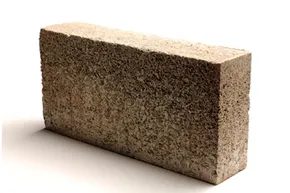

Imagine your neighbors throwing a block party every time your home catches fire. It sounds absurd, but for former Asheville mayor Russ Martin, it’s a running joke. His house burned down once. He didn’t flinch.
The secret to his survival wasn’t sprinklers or fireproof drywall. It was hemp.
Martin built his 3,400-square-foot home using Hemcrete. This isn’t some experimental science project. It’s a material made by mixing dried hemp stems with lime. The British firm Lime Technology developed the formula. Workers take the moist “shiv” — that’s the chopped hemp stalk — and pour it into wall forms. It looks like slurry. It acts like wet concrete. Then it hardens.
The result is a wall that feels solid. It insulates like a dream. A 12-inch-thick Hemcrete wall carries an R-value of R-28. That is serious thermal mass. In the cold months, your heating bill takes a hit. In the summer, your cooling load drops significantly. The wall breathes, too. It regulates humidity. You don’t get that moldy basement smell.
But there is a catch.
Martin paid $133 per square foot to build what he claims is the first hemp house in the United States. That number is staggering. For context, the U.S. average construction cost in 2009 was $83.89 per square foot. In the South, where Martin lives, the average was even lower at $76.77 per square foot. He paid nearly double the regional average.
Why the premium?
It comes down to supply chains and legality.
The federal government classifies all Cannabis sativa as marijuana. This includes industrial hemp. The difference is THC content. Industrial hemp has very little. It doesn’t get you high. But the legal distinction remains a massive barrier.
Because cultivation is restricted, U.S. suppliers cannot grow their own hemp. They have to import it. Importing building materials is expensive. Shipping heavy agricultural products across oceans adds layers of cost. By the time the hemi-shiv hits a contractor’s truck in North Carolina, the price has ballooned.
Other countries are miles ahead.
Canada treats hemp as a major cash crop. It’s not a fringe experiment there. In 2007, Canada exported 862 tons of industrial hemp. Fifty-nine percent of that shipment went straight to the United States. They are scaling up production. They are optimizing harvests. They are bringing the cost down.
The U.S. is stuck in legal limbo.
In 2009, Congressman Ron Paul introduced The Industrial Hemp Farming Act of 2010. The goal was simple. Allow commercial farming. Let states license and regulate the crop. If passed, it would have opened the door for domestic production. It would have cut out the middlemen. It would have lowered the price of Hemcrete for homeowners.
The bill failed.
Today, homeowners who want green building materials face a choice. They can pay a premium for the eco-benefits of imported hemp, or they can stick to traditional materials.
Several states have tried to carve out exceptions. North Dakota. Montana. Vermont. These states passed laws permitting hemp farming under state jurisdiction. But without federal approval, those laws are dead letters. You can’t farm what you can’t legally ship out of state. You can’t build a supply chain on a loophole.
So the status quo remains.
Homeowners weigh the long-term savings of high R-values against the upfront cost of expensive imports. They calculate energy efficiency against construction budgets. They look at the walls that breathe and the bills that shrink.
Then they look at the price tag.
It’s a hard sell when the math doesn’t add up for the average builder. But as regulations shift, and as pressure mounts from green energy advocates, the price might eventually drop. Until then, hemp homes remain a niche luxury. A statement piece. A testament