


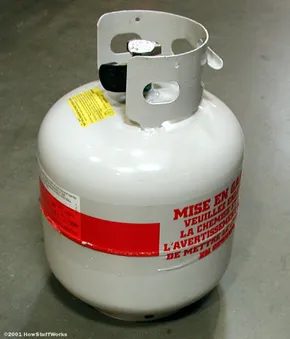

You are the one who flips the switch. A fire is to be expected. But first you need fuel. Most commercially available gas grills use liquid propane (LP) in a portable metal tank. It’s everywhere. Convenience wins.
Natural gas? It stays underground until it passes through a pipe that connects to your home’s gas grid. It cannot be easily bottled. You can’t push it all the way to the campsite. You’re stuck at the end of the pipe.
Why does the difference exist? It has to do with physics.
Propane is a gas at normal temperature and pressure. The boiling point is -46 °F (-43 °C). This is colder than polar ice. But what about the packaging? It turns into a liquid. It remains liquid even when pressurized. This makes storage easier. A small steel tank can store enough energy for a weekend picnic.
Natural gas is not very compressed. It’s still gas. Storage in portable tanks requires large, bulky and expensive tanks. So they bury it in the ground and flow into the house. If you want to use natural gas on your terrace, a permanent installation is required.
Energy deficit
Propane is powerful. Compared to this, natural gas is weaker.
Grills are classified according to their power. This is measured in British Thermal Units (BTU). 1 BTU can raise the temperature of 1 pound of water by 1 degree Fahrenheit. This is a metric for cooking, but it is used by the manufacturer.
One cubic foot of natural gas produces about 1,000 BTUs.
One cubic foot of propane produces about 2,500 BTUs.
This is 2.5 times the energy in the same space. The heat range of grills is typically 20,000 to 50,000 BTU. Larger numbers usually mean more cooking area and power. But here’s the problem. Propane grills require less fuel to reach the same heat as natural gas models.
This makes a huge difference in hardware.
Look at the supply line connected to the burner. Natural gas grill pipes are much larger. That’s almost twice the diameter of a propane pipe. Why? Natural gas requires more volume to produce the same BTU output. It has low density. We need wider pipes.
In general, buy a natural gas grill only if you intend to connect it directly to a gas line in a fixed location and if natural gas is available in your area.
What’s in the tank?
Propane is made from petroleum. It is a byproduct of refining crude oil or processing natural gas. Belongs to the aliphatic hydrocarbons family. These chains consist only of hydrogen and carbon atoms.
Refineries break the oil into chains of different lengths. They separate them. They are mixed with fuel.
- Methane (CH4). 1 pc carbon 4 hydrogen atoms. It is the main component of natural gas.
- Butane (C4H10). 4 carbons. There are 10 hydrogens.
- propane (C3H8). Three carbons. 8 hydrogen atoms.
The one in the middle is propane. A combination of three carbons. It’s very stable. This works well. It compacts when pressed. That’s why backyard grills have replaceable steel tanks.
Natural gas is mainly methane. It also contains large amounts of ethane and butane. However, it does not liquefy in a small container. Requires industrial grade compression. Your terrace doesn’t have it. You have a propane tank. Make it simpler, cheaper, and it works.
When buying a grill, check the label. It appears as “LP” or “Natural Gas”. These are not interchangeable. Aperture and control settings are different. You can do more than just connect a propane tank to your natural gas grill. It won’t light up. Even worse, unburnt gas leaks out. Dangerous.
For most people, tanks are the answer. portable. strong. Easy to store. Keep spare parts on hand