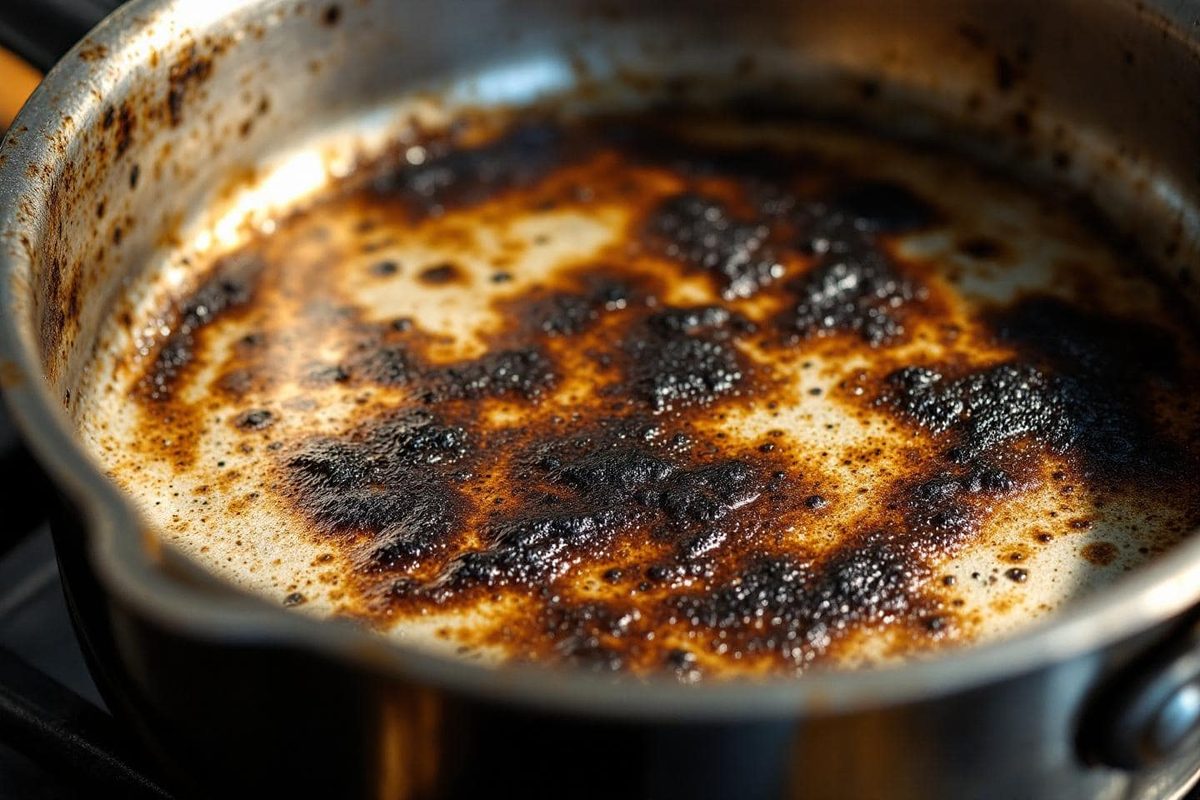
Nobody likes staring at a blackened pot. You spent an hour on dinner, maybe enjoyed it, and then realized the bottom of the pan is essentially charcoal.
It happens. Rice sticks. Sauces reduce too far. You get distracted.
Now you’re standing there with a sponge, wondering if you’re going to ruin the non-stick coating or the stainless steel finish. Most people reach for the abrasive pad. It’s the instinct. But it’s also the mistake. You scratch the surface, you fatigue your arm, and sometimes, it doesn’t even work.
There is a better way. It involves one item you probably already have in the cupboard. It costs pennies. And it requires zero elbow grease.
Why traditional cleaning methods fail on burnt-on food
Burnt residue isn’t just dirt. It’s carbonized organic matter. Once sugar or starch hits high heat long enough, it polymerizes. It bonds to the metal.
Scrubbing it off physically is like trying to sand down a rock with your fingernails.
Commercial cleaners are expensive. They often contain harsh chemicals that smell like a chemical plant and can be harmful if you don’t rinse thoroughly. Plus, they rarely work on heavy carbonization without that same aggressive scrubbing.
The “wait and see” approach makes it worse. Letting a burnt pot sit for days hardens the residue. It becomes permanent.
You need chemistry, not brute force.
Use a dishwasher tablet to dissolve burnt residue
The secret weapon is a dishwasher tablet.
Yes, the same kind you use in your machine. They are packed with enzymes and surfactants designed to break down grease and food particles at high temperatures. That is exactly what you need for a burnt pan.
Here is why it works:
– Enzymes eat the organic matter.
– Surfactants lift the grime from the surface.
– Heat activates the cleaning agents.
It’s not magic. It’s just efficient chemistry. You are using industrial-strength cleaners in a controlled, low-effort environment.
Most people think of vinegar and baking soda. Those are fine for light cleaning. For a pot that looks like it survived a fire, you need something stronger. The tablet is cheap, too. You’re looking at about 15 to 20 cents per use. Compare that to $10 for a specialty cleaner that might not work anyway.
Step-by-step: The no-scrub cleaning method
You don’t need special tools. You just need hot water and patience.
- Scrape the loose bits. Use a wooden spatula or a plastic scraper. Get the big chunks off. Do not use metal if you have a non-stick pan.
- Fill with boiling water. Pour enough water to cover the burnt area. Don’t overfill it. You just need to submerge the mess.
- Drop in the tablet. Throw one dishwasher tablet into the hot water. It will start fizzing and dissolving immediately.
- Wait. This is the only hard part. Let it sit for at least an hour. If the pot is really bad, leave it overnight.
While you wait, the tablet does the work. It softens the carbon. It lifts it from the surface.
- Dump and rinse. Pour out the water. The burnt residue should come out in flakes or sludge.
- Wipe clean. Use the soft side of a sponge. A gentle wipe removes the rest. No scrubbing. No scratches.
If you’re wondering which dishwasher tablets work best, most standard brands are fine. Avoid the ones with heavy plastic films if you can find naked tablets, but any standard gel or powder tablet will work.
Why this method saves your cookware (and your sanity)
This technique is gentle on your pots. Because you aren’t scrubbing, you aren’t scratching the surface. Scratches are where bacteria hide and where future food sticks. Keeping the surface smooth makes cleaning easier next time.
It’s also better for the planet. You’re using one small tablet instead of spraying multiple bottles of aerosol cleaners. You’re rinsing with water, not chemicals.
For stainless steel, this is a lifesaver. For non-stick, it preserves the coating. For cast iron, be careful with the soap, but a quick rinse after soaking can still work if you season it back immediately.
Prevention tip: Rinse your pots with hot water immediately after cooking. Don’t let them cool down with food inside. That’s the single best way to avoid this problem in the first place.
Is it safe for all pots?
Yes, mostly.
- Stainless steel: Safe.
- Non-stick: Safe. Just use a soft sponge afterward.
- Enamel: Safe. The chemicals are standard detergents.
- Cast Iron: Use with caution. The enzymes might strip seasoning if left too long. Rinse very well and re-season.
Avoid this method for aluminum if you are worried about pitting, though the short soak is usually fine. Test it if you’re unsure.
The result is a pot that looks new. No stains. No odor. Just clean metal.
It feels good. There is a specific satisfaction in dumping out sludge instead of scrubbing for twenty minutes. You get back time. You get back your hands.
Next time you burn dinner, don’t reach for the steel wool. Reach for the dishwasher tablet.
It’s a small change. But it changes how you feel about cleaning.
You might even start enjoying the aftermath of cooking again. Or at least, you won’t hate it.