The reflex to buy wallpaper made sense for a few years. It was the easy fix for a tired room. You peel, you stick, you forget. But that era is ending. Fast.
While winter wraps our homes in gray, a shift is happening. It isn’t just about color or pattern anymore. The trend for 2026 is tactile. It’s sensory. Architects and decorators are calling it a revolution. And if you’re planning any updates, you need to know what’s coming before you buy another roll of patterned paper.
Forget the “cozy blanket” vibe for a second. This is about depth. It’s about walls that have character, history, and texture. As we head into the holidays and those long, dark evenings, we crave authenticity. We want to touch our surroundings. Not look at a flat image of wood, but feel the grain.
Why Traditional Wallpaper Is Losing Ground
It’s not that wallpaper is bad. It’s that we’re bored of it. The big wave of panoramic and vintage styles has run its course. Look at most homes today. Floral, geometric, striped. They pile up visually. There’s no breath.
There is a thin line between chic and cluttered. Especially in winter. When you’re stuck inside with family, you don’t want excess. You want calm. You want a sanctuary.
The market is reflecting this fatigue. People are tired of the “trompe-l’œil” effect—the fake depth created by printed images. We want real stuff. Real matter.
This is why natural materials are surging. Wood. Lime. Linen. Wool. These aren’t just trends. They’re responses to a need for truth in our interiors. An interior that feels honest feels safer. It feels like a hug.
What Designers Are Seeing Now
Look at the recent autumn trade shows. Maison&Objet in Paris was a clear signal. The focus wasn’t on flat prints. It was on volume. On relief.
Major brands are already pivoting. Maisons du Monde. Zara Home. They are launching collections built around texture. Even Ikea France is setting up “wall texture” corners in select stores for 2026. This isn’t a flash in the pan. It’s becoming the standard.
Showrooms are competing to offer this new kind of comfort. They’re selling the feeling of walking into a space that feels alive. Not just seen. Felt.
Materials That Define the New Wall
The new revolution is in the touch. Here is what you need to know about the materials taking over in 2026.
Raw and Sculpted Wood
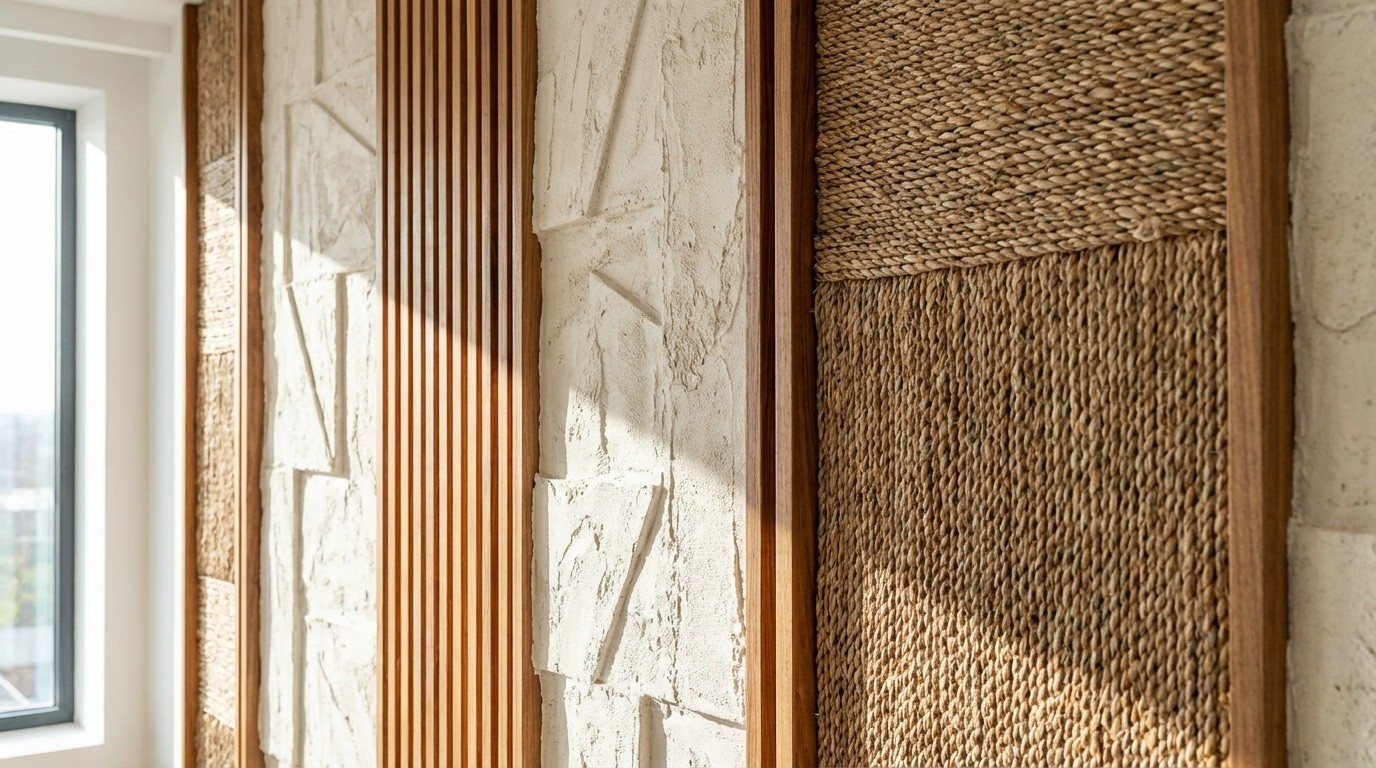
Wood panels are back. But not the flat laminate stuff. We’re talking raw, rough-hewn wood. Or sculpted panels with grain patterns that catch the light. This creates a “chalet chic” atmosphere. It brings the outdoors in. Perfect for winter.
Lime and Plaster Plasters
Forget flat paint. Lime plaster or traditional plasters are being applied in broad, artisanal strokes. The result? Wavy, matte surfaces. Subtle iridescence. These walls change with the light. In the low, slanting light of winter, a plastered wall glows. Paint just sits there. Plaster interacts.
Natural Fibers and Braids
Raffia. Rattan. Jute. These are being woven into panels. You can use them as accents. Behind a headboard. In an entryway. In an alcove. It adds softness without the visual noise of a busy pattern.
Note the shift toward ethical and local materials. There is value in knowing who made it and where it came from. It grounds the space.
Global Inspiration, Local Execution
This trend isn’t ignoring the rest of the world. It’s borrowing from it.
Think of Moroccan tadelakt. Scandinavian wood paneling. Japanese washi paper weaving. But we aren’t copying these blindly. We’re adapting them.
The key is contrast. Mixing materials. A rough wood beam next to smooth plaster. A woven panel against a lime wall. It creates depth. It stops the room from looking uniform. Uniformity is boring. Texture tells a story.
The Sensorial Benefits of Textured Walls
Why go through the trouble? Why pay more for plaster or wood when paint is cheap?
Because it works better.
Acoustics improve. Flat walls echo. Textured walls absorb. In a home full of hard surfaces, sound bounces around. Adding texture softens the noise. It makes the room quieter. More peaceful.
Light behaves differently. Relief breaks up monotony. It catches shadows. In winter, when days are short, you want light to dance. Textured walls create highlights and lowlights. They make a small room feel larger. Or a large room feel cozier.
The touch is comforting. Lean against a wood wall. Feel the temperature. It’s living material. It’s not cold like tile. It’s not sterile like glass. It’s human.
These details matter. Especially in December. When you’re hunkered down for the long nights. You want your home to support you. To hold you.
Textured walls do that. They don’t ask for attention. They just offer comfort.
Is it worth the extra cost? Maybe not immediately. But is it worth the feeling of walking into a room that feels like a true refuge?
The wallpaper era is pausing. The age of touch has begun.
We’ll look at how to actually install these materials next. But first, you need to decide what you want your walls to feel like.
Because once you touch a lime plaster wall, you never go back to flat paint.
Start Small: The Low-Risk DIY Strategy for Textured Walls
You don’t need to strip and re-plaster every room to get the look. This season is about progressive updates. Start with one accent wall. Wood slats or textured plaster in the living room or entryway work well.
Or focus the materiality around the fireplace. It boosts that cozy, “cocoon” vibe right before the holidays.
For renters or anyone on a small budget, try peel-and-stick panels or textile rolls. These are cheap to change and don’t require heavy tools. If you’re mixing textures—matte, raw, soft—keep the color palette tight. This prevents the space from feeling heavy or cluttered.
Where to Buy and How to Install New Wall Coverings
Major French and European retailers like Castorama and Leroy Merlin stock these materials. You’ll find wood panels, ready-mixed plasters, and woven wall coverings. Even traditional hardware stores are partnering with designers now to offer custom natural material walls.
Installation is mostly DIY-friendly. Some textured plasters or panels can be applied in just a few hours. Even beginners can achieve a professional finish with basic tools.
Test first. Pick a small niche, hallway corner, or behind the headboard. See how it looks under your lighting. If you like it, expand. This saves money and avoids buyer’s remorse.
Why We Crave Tactile Interiors Now
This rise in textured decor signals a shift in how we live. It’s part of slow decor. We want durable, sensible items that last. Walls with relief aren’t just decoration anymore. They are a response to uncertainty outside. Home is becoming a refuge. A place for family, warmth, and safety.
Adding texture brings nature indoors. But it also brings comfort. As we move toward 2026, interior design is becoming three-dimensional. Every surface is an experience. Your ideal wall is waiting to be built.