Appliances are the heavy lifters in any kitchen. They account for roughly nine percent of your total renovation budget. That number feels surprisingly small given the tech packed into modern units. Energy efficiency has improved. Smart features are everywhere. But style still matters. You want a space that looks good. You also need gear that performs.
White remains the classic choice. Black follows close behind. Stainless steel offers that professional chef look and keeps gaining ground. If you prefer a rustic Shaker vibe or an Italian villa aesthetic, exposed metal might ruin the mood. Hide the fridge and dishwasher behind cabinet fronts. Manufacturers make panels that match your woodwork. It creates a custom, built-in feel.
For a low-tech look, think about where you put small gadgets. Use countertop-height cabinets for a “depot” style. You can even install a specialized under-counter oven. This article covers the major players. We will look at ovens, refrigerators, sinks, and dishwashers.
How to Choose an Oven
Ovens and ranges come in every shape and size. Picking the right one can be confusing. Gas or electric? Standard or slide-in? It’s not always clear which model fits your specific kitchen layout. We will walk through all available options. This includes comparing fuel sources and exhaust systems. Range hoods are a non-negotiable part of this equation. If you cook heavily, ventilation is a safety and comfort must.
How to Choose a Refrigerator
A reliable fridge is essential. It keeps food from spoiling. It runs 24/7. That constant operation adds up on your energy bill. Finding a unit that balances capacity with efficiency is key. We will guide you through selecting a model that fits your kitchen dimensions and storage needs.
How to Choose a Sink
Sinks do more than hold water. They are the workspace for prep and cleanup. Material choice affects durability and maintenance. You might need a garbage disposal. Water purifiers are becoming standard in many homes. We will answer your questions about materials, sizes, and integrations.
How to Choose a Dishwasher
Dishwashers range from sleek, high-end stainless steel towers to compact countertop models. The right choice depends on your household size and kitchen flow. We will help you navigate features like noise levels, wash cycles, and installation requirements.
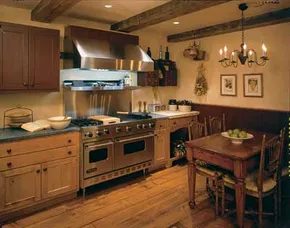
The classic range—cooktop on top, oven below—remains the default for most homeowners. It saves space. It fits the budget. But if you cook seriously, “default” might feel like a compromise.
Serious cooks often jump to commercial-style stoves. You get six or eight burners instead of four. Basting functions. Grilling capabilities. Built-in warming drawers. There’s a catch, though. Real commercial rigs need industrial ventilation and noncombustible walls. In a home, that’s a nightmare. Commercial-style models mimic the look and power but are built for residential wiring and venting.
Then there’s the modular cooktop. You’re not stuck with four burners. Add a griddle. Drop in a deep-fryer unit. A steamer. A wok ring. Even a rotisserie. It’s customization via burner.
Modular Designs and Dual Fuel Options
A bigger trend is breaking the single-unit mold. Wall ovens separate from cooktops. Now you have multiple cooking stations. A double wall oven stacks two chambers, doubling your baking capacity for holidays. Two-oven stoves still exist, with one cavity below and another at eye level.
Your first real choice is gas versus electric. Gas wins for instant response and precise control. Electric offers even heat distribution and lower upfront cost.
Today, you can have both. Dual fuel ranges pair a gas cooktop with an electric convection oven. Convection uses forced hot air to cook up to twice as fast as radiant heating. You can even find combo microwave/convection units.
Electric burners come in flavors:
* Coils. Cheap. Popular.
* Smooth-top. Radiating coils, halogen, or magnetic induction under glass. All need flat-bottom pots.
* Gas sealed burners. Easier to clean. Pilotless ignition means no glowing hot spot when off.
Commercial-style glass gas stoves crank out high BTUs (British thermal units). They look slick. They also require heavy-duty ventilation. Don’t skip that step.
Controls and Placement Strategies
Control placement matters. Front or side controls are standard. Easy to reach. Also easy for toddlers to mess with. If you have young kids, look for controls on the backsplash. Out of reach.
High-end ovens might skip knobs for electronic readouts and touchpads. Make sure the interface makes sense to you.
Most people want fridges and dishwashers to disappear into cabinets. Ranges? The trend is visibility. But if you want to hide your oven, go under-counter. Just ensure the model is designed for it. Not all are. Place a cooktop directly above for a standard feel, or elsewhere for a modular look. No range backsplash means a cleaner line.
Cleaning and Ventilation Needs
Baked-on spills on cooktops are a pain. Ceramic glass tops with electric or halogen burners are easiest to wipe down. Simpler knobs help. A single-piece metal top and backsplash eliminates seams where grease hides.
Self-cleaning ovens fall into two camps:
1. High-heat cycle. Turns spills to ash. You wipe them out later.
2. Continuous clean. Low-level heat throughout normal use.
Range Hoods
Skip external venting? You’ll need a range hood with a built-in fan. Why bother if you don’t mind smells? Vaporized grease dulls surfaces. Moisture compromises insulation efficiency.
An updraft range hood funnels smoke and grease into a duct that leads outside. Filters catch the rest. Look for copper, stainless steel, or customize with ceramic tile.
Down-draft ventilation is an alternative. Usually built into the cooktop or grill. It uses fans and ducts too. Units that rise above the cooktop level vent more effectively than flush mounts.
Next, we move from hot to cold.
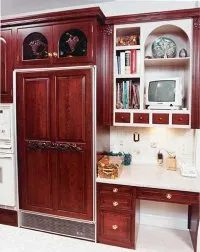
Energy efficiency in refrigerators has jumped significantly since the 1993 and 1998 mandates. Today’s units offer way more than just cold food storage.
You can still buy the basic 18-cubic-foot model with wire shelves and a top-mounted freezer. But the most popular style now offers 20 cubic feet. It comes with adjustable glass shelves. A temperature-controlled meat keeper is standard. Vegetable crispers with humidity control are included too. Plus, an ice maker and door bins for extra convenience.
Cost and convenience rise when you move the freezer to the bottom. These models offer 22 cubic feet of space. They are also gentler on bad backs since you don’t have to reach overhead. Side-by-side designs add to the appeal. So do door-in-door “convenience centers” with built-in water and ice dispensers.
Built-ins and commercial stainless-steel units sit at the top of the price ladder. They offer luxurious looks or high-volume storage for serious cooks.
Sizing Your Refrigerator
How much space do you actually need? A common rule suggests 12 cubic feet for two people. Add 2 cubic feet for each additional member. Sales stockpiling changes the math. Cooking for crowds does too. More room is always better if you plan ahead.
Side-by-side models are the easiest to organize. Smaller models often have narrow freezers. Check the dimensions before you buy. Can it fit a whole frozen turkey? A large pizza?
Look for pull-out and roll-out bins in all cooling sections. You waste energy digging around for items. You waste your own time too. Easy access keeps the door closed longer.
Extra Cooling Options
Beyond the main unit, consider your entertaining needs. If you have the space, add an under-counter fridge for soft drinks. A wine cooling compartment works well for reds and whites.
If you host often, look into heavy-duty ice makers. Some fit into a trash compactor space. They produce large quantities of ice daily.
Choosing a Sink
The next step involves sinks. You have many attachment options. Disposals are standard. Water purifiers add filtration. Faucets range from simple to smart.
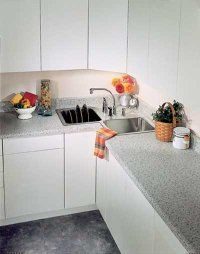
You can expect to spend an average of eight percent of your total budget on kitchen fixtures and fittings, predominantly on sinks and faucets. Sink shape and size are important, and when checking out a sink’s size, pay attention to its depth, too. Bargain sinks may be six or seven inches deep, where eight inches is the standard and ten inches is preferable if you wash a lot of stockpots, pasta pots, and roasters.
Choosing the Right Kitchen Sink Configuration
Popular kitchen sink configurations include the typical single, large rectangular basin; the double-bowled sink with both sinks the same size for hand-washing and rinsing; or the double-bowled sink with one side considerably smaller, housing the garbage disposer. Three-bowl sinks are also available, in which two larger bowls flank a small, center bowl with the garbage disposer installed. This bowl is often topped with a removable cutting board.
In space-challenged kitchens, a pair of matching “corner-square” sinks can make use of an awkward corner and free up straight runs of counter for work space. “Corner circle” sinks serve the same function but have a more avant-garde look. A small square or round sink may be used as a vegetable sink in an island or as a bar sink for a wet bar in the great room. Some kitchens also feature a small, shallow, kidney-shaped sink as a second, accessory sink.
Once you choose the shape and size of your sink based on function, your next decision lies in the wide array of available materials. You may opt for a sink in shiny stainless steel, colorful enamel on cast iron, solid surfacing, or quartz composite.
- Stainless steel, a material that has been popular since the 1950s, is sleek, contemporary, and stain resistant. The thickest and most durable steel is 18 gauge; thinner, 20- and 22-gauge steel is more prone to scratches, dents, and even punctures.
- Enamel-on-cast-iron sinks resemble enamel on steel but are more durable and more popular, although the weight of a cast-iron sink requires hefty counters. Enamel sinks come in a wide assortment of colors, including white, the classic favorite, and colors that make a contemporary fashion statement. All have a glasslike surface that’s easy to clean, but enamel can chip, revealing black cast iron beneath.
- Solid-surfacing sinks are rimless and are seamlessly fused to the adjacent solid-surfacing counter. A handsome contemporary solution that’s relatively easy to clean and repair, solid surfacing offers good color selection and color that goes all the way through. Solid-surfacing sinks cost more than metal ones and require professional installation.
- Quartz composite sinks, a relatively new material, feature color all the way through, good color choices, and the option of a realistic granite look. Like solid surfacing, quartz composite is both stain- and scratch-resistant.
Garbage Disposals
Food waste disposers are considered basic in many kitchen remodelings. Choose either continuous feed, operated by an on/off switch under the sink cabinet or on the wall; or batch feed, activated once the stopper is securely closed and turned. Continuous-feed units are more readily available and less expensive than batch-feed models but are more costly to install. Neither one is “better” than the other; it’s a matter of personal choice and preference.
How to Choose a Dishwasher
In our final section, we will learn how to choose a dishwasher.
Led by high-end, stainless-steel European models, today’s dishwashers are extremely quiet thanks to extra insulation. They’re also more energy efficient than they were in the past, using fewer kilowatt-hours per wash cycle, less water, and an air-dry option that doesn’t require heat. To further cut energy costs, choose a dishwasher with internal water heating; it increases temperatures to grease-dissolving levels so the machine doesn’t place extra demands on your home’s hot water heater.
While portable dishwashers are available, most models are built-ins and can be concealed behind panels that match your cabinetry if you desire. Top-of-the-line machines feature electronic touch-pad controls, stainless-steel interiors, and special wash cycles such as crystal, china, and pots/pans. Less-costly models employ push buttons or combine buttons with a dial. These models usually offer three cycles: light, normal, and heavy.
Kitchen appliances can be much more complex that other household appliances. For instance, the refrigerator is one of the few appliances you own that has to run continuously. That’s why, it’s important to know how to pick out the right appliance for you before you invest your money.